

Why Is My Gold Ring Turning My Finger Green? Understanding Jewelry Chemistry
What if that faint emerald shadow on your skin isn't a sign of "fake" gold, but rather a fascinating chemical dialogue between your body and your most cherished heirlooms? We've seen many clients visit our workshop with a heavy heart, asking why is my gold ring turning my finger green after wearing a beloved religious band or diamond ring. It's a common source of anxiety. Yet, it rarely indicates a lack of quality. Instead, it reveals how your unique skin chemistry interacts with the essential alloys that give 14K gold its enduring strength and character.
We understand the frustration of seeing a mark on your skin where a symbol of brilliance should be. It's unsettling to feel that a piece of fine jewelry might not be what it seems. In this guide, you'll discover the scientific reasons behind jewelry discoloration and learn how to maintain the pristine beauty of your fine 14K gold pieces. We'll walk you through the nuances of metal oxidation, explain the role of moisture, and provide actionable steps to ensure your rings remain comfortable and radiant for generations to come.
Key Takeaways
- Learn the scientific truth behind why is my gold ring turning my finger green, focusing on the natural reaction between skin acidity and the copper alloys used in 14K gold.
- Understand how the essential metals added to pure gold for durability can occasionally leave a trace on your skin without compromising the inherent quality of your jewelry.
- Discover simple, effective methods for cleaning your fine pieces at home using mild soap and warm water to prevent the buildup of moisture and oils.
- Explore why 14K gold remains the premier choice for religious pendants and heirlooms, offering a perfect balance of purity and lifelong resilience.
- Recognize the importance of professional resizing and polishing to ensure a proper fit that minimizes the trapping of environmental catalysts against your skin.
The Alchemy of Alloys: Understanding Why Gold Leaves a Green Trace
It's a moment of sudden doubt. You look down at your hand and see a faint emerald shadow where your gold band rests. Your first instinct might be to worry about the authenticity of your piece, asking yourself, "why is my gold ring turning my finger green?" We want to reassure you that this reaction is rarely a sign of poor quality. In fact, it's often a testament to the metal's durability. Pure 24K gold is incredibly soft, almost like clay, making it far too delicate for the intricate carvings of gold religious pendants or the daily demands of an engagement ring. To ensure your jewelry survives the test of time, we must blend pure gold with other metals to create a resilient alloy.
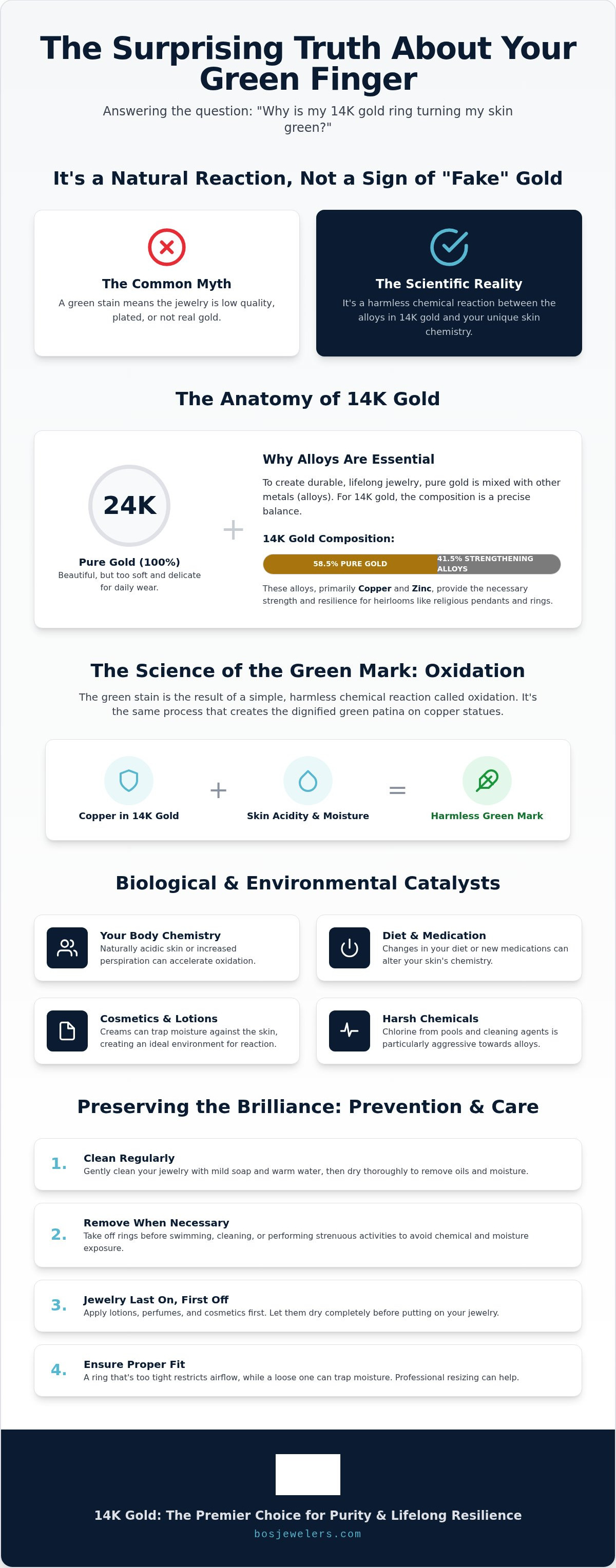
In our workshop, we focus on 14K gold, which contains approximately 58.5% pure gold. The remaining 41.5% consists of strengthening metals like copper, zinc, or nickel. These additions are vital for structural integrity. Without them, your ring would lose its shape or fail to hold a diamond securely. While these base metals provide strength, they are also more chemically active than gold itself. When they encounter specific environmental factors, they react, leaving that telltale mark on your skin. This doesn't mean your jewelry is "fake" or plated; even the finest 14K gold can leave a trace under the right conditions.
The Role of Copper and Nickel in 14K Jewelry
Oxidation vs. Corrosion: What is Happening to Your Skin?
The green mark is the result of a process called oxidation. When the copper in your ring reacts with oxygen and the moisture on your hand, it creates copper carbonates. You might know this substance as Verdigris, the same dignified green patina that forms on copper domes and historical statues. This reaction is entirely external and harmless. It's a temporary surface phenomenon where acids on your skin turn the metal into colorful salts. Oxidation is a natural surface reaction that does not damage the core of the gold or indicate that the metal is breaking down.
Biological and Environmental Catalysts for Jewelry Discoloration
Your body is a living, breathing landscape, and its chemistry is as unique as your fingerprint. While we often think of gold as an inert metal, the alloys within it respond to the world around them. One of the primary reasons you might wonder why is my gold ring turning my finger green involves your skin's pH level. Some individuals naturally possess a more acidic skin chemistry. This acidity acts as a catalyst, accelerating the reaction between your skin and the copper found in 14K gold. When you add perspiration or high-humidity environments into the mix, the process speeds up significantly. Sweat contains chlorides that can react with the copper to create those temporary green marks.
External factors also play a significant role. Common household chemicals are often more aggressive than we realize. Chlorine, frequently found in swimming pools and cleaning agents, is particularly harsh on jewelry. It doesn't just cause discoloration; it can actually stress the metal over time. Even changes in your diet or new medications can alter the composition of your skin's secretions. These subtle biological shifts can suddenly trigger a reaction in a ring you've worn comfortably for years. It's a dialogue between your environment and your jewelry that requires a bit of mindfulness to manage.
Cosmetics, Lotions, and the 'Hidden' Trap
Many of the luxury creams and perfumes we love contain ingredients that don't always harmonize with gold alloys. Hand lotions often trap moisture against the skin, creating a sealed environment where oxidation thrives. Some cosmetics even contain microscopic abrasive minerals. These particles can act like fine sandpaper, wearing away tiny, invisible flecks of metal that then oxidize on your finger. We suggest making your jewelry the final touch of your morning routine. Apply your products first, let them dry completely, and then slide on your rings to keep the metal pristine.
Gemstones and Moisture Retention
Intricate settings designed to hold precious birthstones or detailed religious iconography possess small galleries and prongs that are beautiful but functional traps. These nooks easily collect soap residue, dead skin cells, and water. When moisture stays trapped behind a stone, it creates a concentrated area for chemical reactions. This can sometimes lead to a Jewellery allergy or contact dermatitis, which might be mistaken for metal oxidation. Religious rings with high-relief details need extra attention to ensure they stay dry. If you find moisture is constantly trapped, our professional jewelry cleaning and polishing services can remove the hidden buildup that home rinsing might miss.
Preserving the Brilliance: Professional Maintenance and Preventative Care
Restoring the luster of a cherished heirloom is as much about gentle daily attention as it is about expert intervention. If you’ve been searching for answers to why is my gold ring turning my finger green, the solution often lies in a refined care routine. We recommend a simple yet effective home ritual. Soak your ring in a bowl of warm water mixed with a few drops of mild, phosphate-free dish soap. Use a very soft-bristled brush to gently whisk away oils. This prevents the chemical buildup that leads to skin staining before it has a chance to begin.
Moisture is the primary catalyst for the oxidation we discussed earlier. After cleaning or washing your hands, you must dry your jewelry thoroughly with a soft, lint-free cloth. Even a tiny droplet trapped behind a prong can trigger a reaction. We also suggest following the "Last On, First Off" rule. Your jewelry should be the final touch after your perfume and lotion have dried, and the first thing you remove when you return home. This practice minimizes exposure to the environmental factors that cause discoloration and keeps your gold radiant.
The Importance of Professional Cleaning and Polishing
While home care is essential, it can’t replace the precision of a master jeweler. Our specialized ultrasonic cleaners and steam tools reach into the microscopic crevices of intricate settings that a toothbrush simply cannot touch. If a ring has already developed a dark patina, professional polishing is the only way to truly restore its mirror-like finish. This process carefully removes the thin oxidized layer without compromising the structural integrity or thinning the gold. Regular professional jewelry cleaning ensures your pieces remain as brilliant as the day you first wore them.
Fit and Resizing: A Surprising Solution
Sometimes, the green mark isn't about the metal at all, but the fit. A ring that is too tight creates a seal against your skin, trapping perspiration and preventing the area from breathing. This concentrated moisture accelerates the reaction with the copper alloys. Ensuring a proper fit allows for airflow and reduces the time sweat stays in contact with the metal. If your finger has changed size over the years, ring resizing can be a vital preventative measure for both your comfort and the health of the gold.
If you’ve noticed a persistent mark, don't let it diminish your joy. Visit our experts for professional jewelry cleaning and polishing to bring back the pristine glow of your fine 14K gold jewelry.
The 14K Standard: Why Heritage and Composition Matter in Religious Jewelry
Choosing a piece of jewelry that represents your faith is a deeply personal decision. It’s an investment in a symbol you likely intend to wear every single day. This constant contact is exactly why we champion the 14K standard for our collections. While you might initially worry and ask why is my gold ring turning my finger green, choosing 14K gold over lower-karat options or plated alternatives actually minimizes these occurrences in the long run. Plated jewelry eventually loses its thin gold layer, exposing base metals that react much more aggressively with your skin. By choosing solid 14K gold, you’re ensuring the piece maintains its structural integrity and its spiritual significance for decades.
We view every ring and pendant as a vessel for a story. When a metal is too pure, it’s too soft to hold those stories securely. When it’s too diluted with base alloys, it loses its noble character. 14K gold strikes the perfect chord between these two extremes. It provides the resilience needed for a life well-lived while retaining the intrinsic value and warmth of genuine gold. It’s a metal that ages with grace, developing a character that reflects the journey of the wearer.
Selecting High-Quality Religious Rings and Pendants
When you examine a fine piece, look for the "14K" hallmark. This stamp is a silent promise of quality. In the United States, 14K gold must be at least 58.3% pure gold. We often prefer a 58.5% standard to ensure the richest color and most reliable durability. For gold religious pendants, this balance is crucial. A 10K piece contains a higher percentage of copper and zinc, which can actually increase the likelihood of skin discoloration. 14K gold offers superior resistance to the elements while remaining strong enough to protect the delicate details of a cross or a saint’s medal.
BOS Jewelers: A Legacy of Craftsmanship
Our family has spent over 40 years perfecting the art of gold and diamond jewelry. At BOS Jewelers, we don't just act as intermediaries; we are creators and guardians of your family’s history. Because we have expert artisans on our premises, we maintain strict control over the integrity of every alloy we use. We understand that a religious ring isn't just a band of metal. It's a milestone, a prayer, and a memory. We invite you to consult with our experts for custom designs or to have your heritage pieces professionally inspected. Our commitment to high-quality materials ensures your jewelry remains a brilliant legacy that can be passed down through generations.
Embracing the Radiance of Your Fine Gold
Understanding the chemistry of your jewelry transforms a moment of worry into an opportunity for deeper appreciation. That subtle green trace is simply a dialogue between your unique skin chemistry and the essential alloys that make your jewelry strong. By maintaining a clean, dry environment and ensuring a professional fit, you can preserve the brilliance of your most meaningful pieces. You no longer need to wonder why is my gold ring turning my finger green; instead, you can focus on the artistry and faith your jewelry represents. Proper care ensures that these symbols of devotion remain as luminous as the day they were first placed on your finger.
Since 1983, our family-owned workshop has dedicated itself to the artistry of high-purity 14K gold and diamonds. We bring over 40 years of expert craftsmanship to every piece, ensuring that your symbols of faith and love remain as vibrant as your memories. We invite you to Explore our collection of heirloom-quality 14K Gold Religious Jewelry and find a companion for your journey. Your story is unique, and it deserves to be told through jewelry that stands the test of time with grace and brilliance.
Frequently Asked Questions
Is it true that only cheap jewelry turns your finger green?
No, it's a common misconception that only inexpensive pieces cause discoloration. Even the finest 14K gold jewelry contains alloys like copper and zinc to ensure the piece is strong enough for daily wear. These metals can react with your unique skin chemistry regardless of the item's prestige or price. We focus on 14K gold because it offers the perfect balance of purity and resilience for cherished heirlooms.
Can an allergy to nickel cause my skin to turn green or black?
Nickel typically causes redness, itching, or a rash rather than a green stain. If you notice a dark or black mark, it's often the result of microscopic metal particles being worn away by abrasive ingredients in your cosmetics or lotions. Green marks are almost exclusively the result of copper oxidation. Understanding this distinction helps you determine if you're experiencing a biological sensitivity or a simple chemical interaction with your environment.
How do I get the green stain off my finger quickly?
You can easily remove the mark using mild soap and warm water. If the stain is persistent, a gentle makeup remover or a small amount of rubbing alcohol on a cotton pad will lift the residue almost instantly. It's a temporary surface mark that doesn't harm your skin. We suggest drying your hands thoroughly after washing to prevent moisture from becoming trapped under your ring again, which helps stop the cycle.
Will 18K gold turn my finger green less often than 14K gold?
18K gold generally reacts less frequently because it contains a higher percentage of pure gold. Since 18K is 75% pure gold compared to the 58.5% found in 14K, there are fewer base metal alloys available to oxidize against your skin. However, 18K is significantly softer. It might not provide the structural security required for the intricate prongs of diamond engagement rings or the delicate carvings found in religious pendants.
Does sweat make gold jewelry tarnish faster?
Sweat acts as a powerful catalyst for oxidation because it contains chlorides and various acids. These elements speed up the reaction between your skin and the copper alloys in your jewelry. This is often why is my gold ring turning my finger green more frequently during the humid summer months or after a workout. Frequent, gentle rinsing with fresh water after you perspire helps mitigate this effect and keeps the metal bright.
Can I use clear nail polish to stop my gold ring from turning my finger green?
We strongly discourage using nail polish on fine jewelry. While it creates a temporary barrier, it can trap moisture against the metal and eventually flake off, potentially marring the professional finish of your ring. A much more elegant and effective solution is regular professional cleaning or a simple resizing. Ensuring proper airflow between the metal and your skin is the most reliable way to prevent discoloration without risking the integrity of the gold.