

Signs Your Diamond Ring Needs Repair: The Essential Guide to Protecting Your Legacy
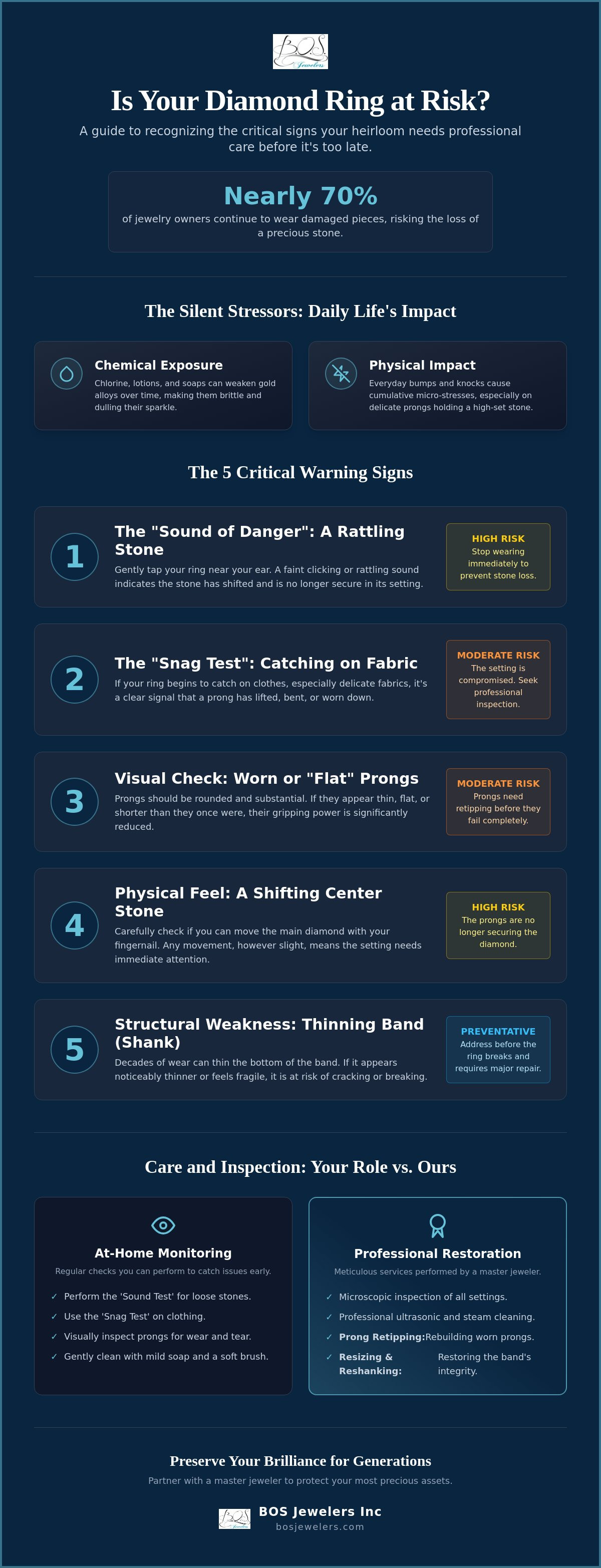
Nearly 70% of jewelry owners continue to wear damaged pieces for months before seeking professional help, often turning a simple adjustment into the heartbreaking loss of a center stone. Your diamond ring is a silent witness to your life's most beautiful chapters; it is a sparkling archive of love and commitment. Because these heirlooms are worn daily, it's easy to overlook the subtle signs your diamond ring needs repair until the structural integrity is compromised. We believe that protecting these treasures is a vital part of honoring your family's unique history.
We understand the deep emotional weight carried by your 14K gold jewelry and the worry that arises when you suspect a setting is no longer secure. You'll learn exactly how to identify the warning signs of wear, from thinning bands to shifting stones, ensuring your ring remains as brilliant as the day you first wore it. This guide previews the professional restoration process and provides the technical knowledge you need to partner with a master jeweler. Together, we can ensure your jewelry continues to shine for generations to come.
Key Takeaways
- Identify the subtle signs your diamond ring needs repair before a minor structural issue leads to the heartbreaking loss of a center stone.
- Understand how the delicate balance of 14K gold durability can be affected by daily wear and common environmental stressors.
- Master the art of the 'sound test' and other physical inspections to catch thinning prongs or shifting diamonds early.
- Learn why professional ultrasonic cleaning and microscopic inspections are essential for preserving the brilliance and security of your legacy pieces.
- Discover the meticulous craftsmanship behind restoration services like prong retipping and resizing that breathe new life into your most precious assets.
The Silent Stressors: How Daily Life Impacts Your Diamond Ring
Your diamond ring isn't just a piece of jewelry; it's a constant companion that travels through every moment of your day. While 14K gold is prized for its exquisite balance of purity and resilience, it remains a precious metal that reacts to its environment. We often meet clients who are surprised that a ring worn for years has suddenly developed a loose stone. Understanding the signs your diamond ring needs repair starts with recognizing that daily life is a series of microscopic stresses on your setting. The physics of 14K gold requires this blend of alloys to ensure the metal is hard enough for daily wear, yet it still possesses a degree of malleability that can change over decades of use.
Proactive care is the hallmark of a true steward of family history. It's far more graceful, and certainly more cost-effective, to maintain a setting than to rebuild one after a diamond has been lost. By viewing your jewelry through a legacy lens, you ensure that the craftsmanship we provide today survives to be admired by your grandchildren. This perspective shifts the narrative from "fixing a problem" to "preserving an heirloom."
For those who appreciate the history behind their jewelry and wish to discover Heirloom Jewelers, their collection of estate and vintage rings offers a beautiful way to expand your family's collection of heirlooms.
Chemical Exposure and Metal Erosion
Household environments are surprisingly harsh for fine jewelry. Chlorine, often found in swimming pools and even common tap water, can cause stress corrosion cracking in gold alloys. Over time, these chemicals leach out the strengthening base metals, leaving the gold brittle and prone to snapping. Additionally, the buildup of lotions, soaps, and organic oils doesn't just dull the sparkle; it creates a film that can trap abrasive grit against the metal. Exploring various Jewelry cleaning methods can help maintain surface beauty, but professional intervention is needed when chemical damage occurs at a molecular level. Metal fatigue in fine jewelry settings is the progressive weakening of gold alloys caused by repeated stress or chemical exposure, eventually leading to structural failure or cracks.
Physical Impact and Setting Displacement
Every time your hand brushes a granite countertop or clicks against a car door handle, your ring absorbs the shock. These mechanical stresses are cumulative. While a sturdy 14K gold band can handle significant wear, the delicate prongs holding a diamond are far more vulnerable. This is especially true for intricate diamond engagement rings compared to more robust pieces like custom diamond nameplates, which often feature different structural support and lower profiles. High-set stones act like a lever; even a small bump at the top of the stone puts immense pressure on the base of the prongs.
One of the most reliable signs your diamond ring needs repair is what we call the "snag test." If your ring begins to catch on delicate fabrics like silk or a favorite wool sweater, it's a clear signal that a prong has lifted or shifted. This seemingly small inconvenience is actually a warning that your center stone is no longer fully protected. Identifying these shifts early allows our master jewelers to secure your legacy before the damage becomes irreversible.
The Five Critical Warning Signs Your Ring Needs Professional Repair
A diamond is eternal, but the gold that holds it is not. When you wear a ring every day, the metal slowly thins, and the prongs that act as guardians for your center stone can begin to lose their grip. Recognizing the signs your diamond ring needs repair is the difference between a simple afternoon maintenance visit and the devastating loss of a family heirloom. We believe that an educated eye is a diamond's best defense. By performing a few simple checks at home, you can identify structural vulnerabilities before they escalate into a crisis.
The Auditory Check: Identifying a Rattling Stone
One of the most immediate indicators of trouble is what we call the "Sound of Danger." Hold your ring between two fingers close to your ear and gently tap the band with your other hand. If you hear a faint clicking or rattling, the stone has likely shifted within its seat. This sound indicates that the metal has pulled away from the diamond's girdle, leaving it to vibrate with every movement of your hand. While a loose side stone is a concern, a rattling center stone in diamond engagement rings is a technical emergency. If you hear this sound, stop wearing the piece immediately to prevent the diamond from falling out entirely.
Inspecting the Prongs: The 'Catch' and 'Flat' Tests
Your prongs should look like rounded, healthy "claws" that securely overlap the edge of the diamond. Over time, these tips can wear down until they appear flat or thin against the stone. Use a magnifying glass to look for "flat spots" where the gold has been filed away by friction against hard surfaces. Another practical diagnostic is the "catch test." If your ring begins snagging on your hair or fine fabrics, it's a signal that a prong has lifted or bent away from the stone. A missing prong is even more critical; it leaves an entire side of the diamond unsupported, making it vulnerable to even the slightest impact.
Beyond the setting itself, look at the shank—the bottom portion of the band. It should maintain a perfect circle. If the band looks oval or feels paper-thin at the bottom, the metal has worn down to a point where it may snap under pressure. You might also notice visible hairline cracks or strange discoloration in the 14K gold, which are clear indicators of metal fatigue. Finally, if your diamond remains dull despite regular care, it may have a buildup of residue beneath the setting that only a professional can reach. For more on maintaining the luster of your stones, GIA's diamond care guide offers expert insights into long-term preservation. If you notice any of these changes, a quick visit for professional jewelry cleaning and polishing at our heritage workshop can often reveal and resolve these issues before they threaten your legacy.
Professional Inspection vs. At-Home Monitoring: A Comparison
While your own observations are the first line of defense, a professional eye provides the certainty that an heirloom deserves. Identifying the signs your diamond ring needs repair through the "snag test" or a visual check is an excellent habit, but it's akin to checking the oil in a car without ever opening the hood. Our master jewelers utilize a 10x magnification loupe to peer into the hidden architecture of your ring. This tool reveals hairline fractures in the gold and microscopic chips in the diamond's girdle that remain invisible to the naked eye. These tiny vulnerabilities are the precursors to significant damage if left unaddressed.
Beyond mere magnification, we perform structural integrity testing. This involves checking the tension of the setting and ensuring that the "seats"—the tiny grooves carved into the metal where the diamond rests—are still sharp and supportive. After 40 years of family-owned expertise, we've developed an intuitive touch for these delicate balances. We don't just look at the piece; we feel the resonance of the metal to ensure every component is harmonious and secure. This expert touch is something a DIY inspection kit simply cannot replicate.
What Happens During a Professional Jewelry Inspection?
Our diagnostic process is a meticulous journey through your jewelry’s history. We begin by examining the galleries, the open spaces beneath the stone that allow light to enter, checking for any debris that could be masking structural damage. We then inspect the seats to ensure the diamond hasn't carved away too much of the gold through years of shifting. Regularly checking the shank for thinning is vital because a worn band can eventually snap, leading to a complete loss of the setting. This comprehensive review ensures that every anchor point of your legacy is accounted for, providing you with peace of mind that your ring is as strong as it is beautiful.
The Limitations of At-Home Cleaning
It's tempting to rely on home steamers or ultrasonic kits to maintain that daily sparkle. However, these tools carry risks if the setting is already compromised. High-pressure steam can actually dislodge a stone that is only held in place by a single weakened prong. Certain "all-purpose" cleaners contain abrasive chemicals that can slowly erode the base metals in your 14K gold alloys, leading to brittleness over time. When you notice that your diamond remains cloudy despite your best efforts, it's time to seek a professional jewelry cleaning service. Our on-site artisans use specialized equipment and gentle, proven solutions to restore brilliance without risking the safety of your most precious assets.
Restoration Services: From Prong Retipping to Masterful Resizing
Once you've identified the signs your diamond ring needs repair, the journey toward restoration begins in the hands of a master artisan. Fine jewelry, particularly pieces crafted from 14K gold, requires a specialized touch because of its unique material properties. 14K gold is a carefully balanced alloy, meaning it is blended with metals like copper and zinc to achieve the durability needed for daily life. However, this also means that when we perform restoration, we must respect the specific melting points and structural memory of that particular blend. Our goal is always to ensure the repair is both invisible to the eye and permanent in its strength.
Restoration isn't just about fixing what is broken; it's about renewing the structural foundation of your heirloom. Whether it's a simple polishing to remove micro-abrasions or a complex structural reinforcement, every action we take is designed to protect the diamond at the heart of your story. We treat every 14K gold band as a vessel for your memories, ensuring that the metal remains robust enough to carry those memories forward.
The Technical Precision of Prong Retipping
Prong retipping is a delicate, precision-focused procedure for your jewelry. Rather than replacing the entire head or setting, which can be invasive for the stone, our on-site master jewelers carefully build up the worn metal tips. We use tiny beads of matching 14K gold to reinforce the "claws," ensuring they once again exert the necessary pressure to hold your diamond fast. This on-site approach is vital for the security of your piece. Your sentimental center stone never leaves our workshop, and the technical precision is overseen by artisans who understand the weight of your family history. Retipping allows us to maintain the original aesthetic of the ring while providing the security of a brand-new setting.
Achieving the Perfect Fit: Professional Resizing
A ring that spins or slides too easily is more than just a minor nuisance; it's a structural hazard. When a ring is too loose, the top-heavy setting constantly impacts hard surfaces, accelerating the very signs your diamond ring needs repair that we've discussed. Professional ring resizing is the essential bridge between daily comfort and long-term security. We determine your true size while meticulously preserving the hallmarks and integrity of the gold band.
If the band has thinned significantly over decades, we may recommend a half-shank or full-shank replacement. This process involves removing the worn, paper-thin section of the band and seamlessly welding a new, robust piece of 14K gold to the original setting. This masterful intervention effectively resets the clock on your ring's lifespan, ensuring it doesn't snap or warp under pressure. If your heirloom has lost its original luster or feels insecure on your finger, you can trust our heritage workshop for expert ring resizing and prong repair to keep your legacy brilliant.
Preserving Your Brilliance: A Partner in Lifelong Jewelry Care
Your jewelry tells a story that spans decades, capturing the essence of your most cherished milestones. While we have explored the physical signs your diamond ring needs repair, the ultimate protection for your heirloom is a lasting partnership with a trusted artisan. We believe that jewelry care is a lifelong journey, one that requires both your watchful eye and our technical expertise. When you choose a partner who has spent four decades perfecting the art of restoration, you aren't just buying a service; you're securing a future for your most precious objects. Our 40 years of family-owned expertise allows us to treat every piece with the same reverence you do.
We recommend a bi-annual checkup for your most frequently worn pieces. This routine maintenance is much like a professional cleaning for your teeth; it catches the microscopic shifts and thinning gold before they become structural failures. These regular visits provide emotional peace of mind, knowing that the "claws" of your setting are strong and your stones are secure. It's a celebratory moment to see your ring's original brilliance restored, ensuring it remains as radiant as the day it was first placed on your finger.
Building a Relationship with Your Master Jeweler
Having a single point of contact for your jewelry's history is invaluable. Just as a family doctor knows your health records, a heritage jeweler understands the specific composition and previous work done on your 14K gold settings. This consistency ensures that any future repairs or bespoke additions are handled with a deep understanding of the piece's structural memory. Our expert artisans treat every repair as a work of preservation rather than a simple transaction. We take the time to learn the story behind your ring, which allows us to provide advice that respects its sentimental and historical value.
Next Steps: Restoring Your Ring's Original Splendor
Preparing for your first professional inspection is a simple, rewarding process. If you have them, please bring any original GIA certificates or previous repair records. These documents provide a technical roadmap that helps us understand the original specifications of your diamonds and the history of the metal. If you've noticed any of the signs your diamond ring needs repair, such as a slight snag on your clothing or a dullness that won't wash away, share those observations with us. We invite you to prioritize the security of your diamond engagement rings by scheduling a visit to our workshop. We look forward to welcoming you into our community and helping you build a lasting personal history through the beauty of fine jewelry.
A Future as Brilliant as Your Past
Your diamond ring is more than a collection of precious materials; it's a tangible archive of your most significant life milestones. By remaining vigilant and recognizing the subtle signs your diamond ring needs repair, you act as the guardian of your family's unique history. Whether you've noticed a tiny snag on your favorite sweater or a faint rattling sound, these small signals are opportunities to reinforce the structural integrity of your heirloom before the unthinkable happens. Proactive maintenance is the most elegant way to honor the commitment your jewelry represents.
Beyond jewelry maintenance, if you find yourself needing an expert evaluation for other family treasures or high-value items, you can learn more about CT Gold & Silver and their specialized services for collectibles.
Since 1983, our family-owned establishment has served as a pillar of craftsmanship and trust for our community. With over 40 years of heritage, BOS Jewelers Inc provides the quiet confidence that only comes from decades of dedicated expertise. Our on-site master jewelers perform every technical restoration with meticulous care, ensuring your sentimental pieces never leave our secure workshop. We invite you to schedule your professional jewelry inspection at BOS Jewelers Inc to restore the original luster and security of your treasures. We look forward to partnering with you to ensure your brilliance continues to shine for many generations to come.
Frequently Asked Questions
How often should I have my diamond ring professionally inspected?
We recommend having your diamond ring professionally inspected every six months to ensure its longevity. This bi-annual rhythm allows our master jewelers to identify microscopic wear before it leads to stone loss. Regular checkups are especially vital for daily-wear pieces like engagement rings, as they endure constant contact with hard surfaces and environmental stressors.
Is it normal for my diamond to wiggle or make a clicking sound?
It's never normal for a diamond to wiggle or produce a clicking sound within its setting. These auditory cues are definitive signs your diamond ring needs repair and indicate that the metal has pulled away from the stone. If you hear this "sound of danger," stop wearing the ring immediately and bring it to a heritage jeweler for a technical inspection.
What is prong retipping, and when is it necessary for my ring?
Prong retipping is the meticulous process of adding small beads of 14K gold to the tips of worn prongs to reinforce their grip. This service is necessary when the metal has flattened or thinned due to years of friction. By building up these protective claws, our artisans restore the structural security of your center stone without needing to replace the entire head or setting.
Can a thinning gold band be fixed, or do I need a new ring?
A thinning gold band can certainly be restored through a process called shank replacement. Instead of replacing the entire ring, we remove the worn portion of the band and seamlessly weld a new, robust section of 14K gold in its place. This restoration preserves the sentimental upper portion of your ring while ensuring the bottom is strong enough for decades of future wear.
Does ring resizing weaken the overall structure of the diamond setting?
Professional ring resizing does not weaken the overall structure when performed by an expert artisan. We take great care to maintain the metal's memory and ensure the diamond setting remains undisturbed during the process. In fact, a properly sized ring is safer to wear, as it reduces the risk of the setting spinning and sustaining impact damage against hard surfaces.
Why does my diamond look cloudy even after I clean it at home?
Persistent cloudiness often indicates a buildup of organic material or hard-water film behind the stone where home brushes cannot reach. Professional jewelry cleaning utilizes ultrasonic technology to vibrate these deep-set particles loose, restoring the diamond's original refractive brilliance. If the cloudiness remains, it may also be a sign of surface micro-abrasions that require professional polishing to resolve.
What should I do if a prong on my ring is snagging on my clothes?
If a prong is snagging on your clothes, you should remove the ring immediately to avoid pulling the metal further away from the stone. This snagging is one of the most common signs your diamond ring needs repair and suggests a prong has lifted or bent. Continuing to wear a snagged ring puts your diamond at immediate risk of falling out if the metal catches a heavy thread.
Is it safe to wear my diamond ring while exercising or cleaning?
It's best to remove your diamond ring before exercising or using household cleaning agents. Harsh chemicals like chlorine can erode the base metals in 14K gold alloys, while the mechanical stress of lifting weights can warp the band or loosen the setting. Storing your jewelry in a secure place during these activities is the simplest way to preserve its structural integrity for generations.