

Mixing White and Yellow Gold Jewelry: The 2026 Guide to Sophisticated Curation
The rigid fashion rule that once forbade you from wearing different metal tones together has finally been laid to rest. In 2026, the most elegant wardrobes are defined not by strict uniformity, but by the artful curation of pieces that tell a personal story. You might feel a lingering sense of anxiety when reaching for a favorite yellow gold bangle while wearing a white gold wedding band, fearing the look appears accidental rather than intentional. We understand that hesitation; for generations, we were told these worlds should never collide. However, mixing white and yellow gold jewelry is no longer a rebellion. It's a sophisticated method of storytelling that bridges heirloom legacies with modern brilliance.
We're here to help you move past the confusion of layering and the fear of "breaking" traditional rules. You'll discover how to masterfully combine these tones to create a high-end look that feels both cohesive and deeply personal. This guide explores the secrets to using bridge pieces, the power of varied textures, and the specific 2026 trends that make dual-tone curation the ultimate mark of a confident collector. Whether you're blending a cherished family heirloom with a new custom diamond nameplate or stacking bangles of different hues, you'll gain the confidence to build a jewelry wardrobe that reflects your unique history.
Key Takeaways
- Learn why the rigid fashion rules of the past have evolved into a more expressive, curated approach to modern luxury.
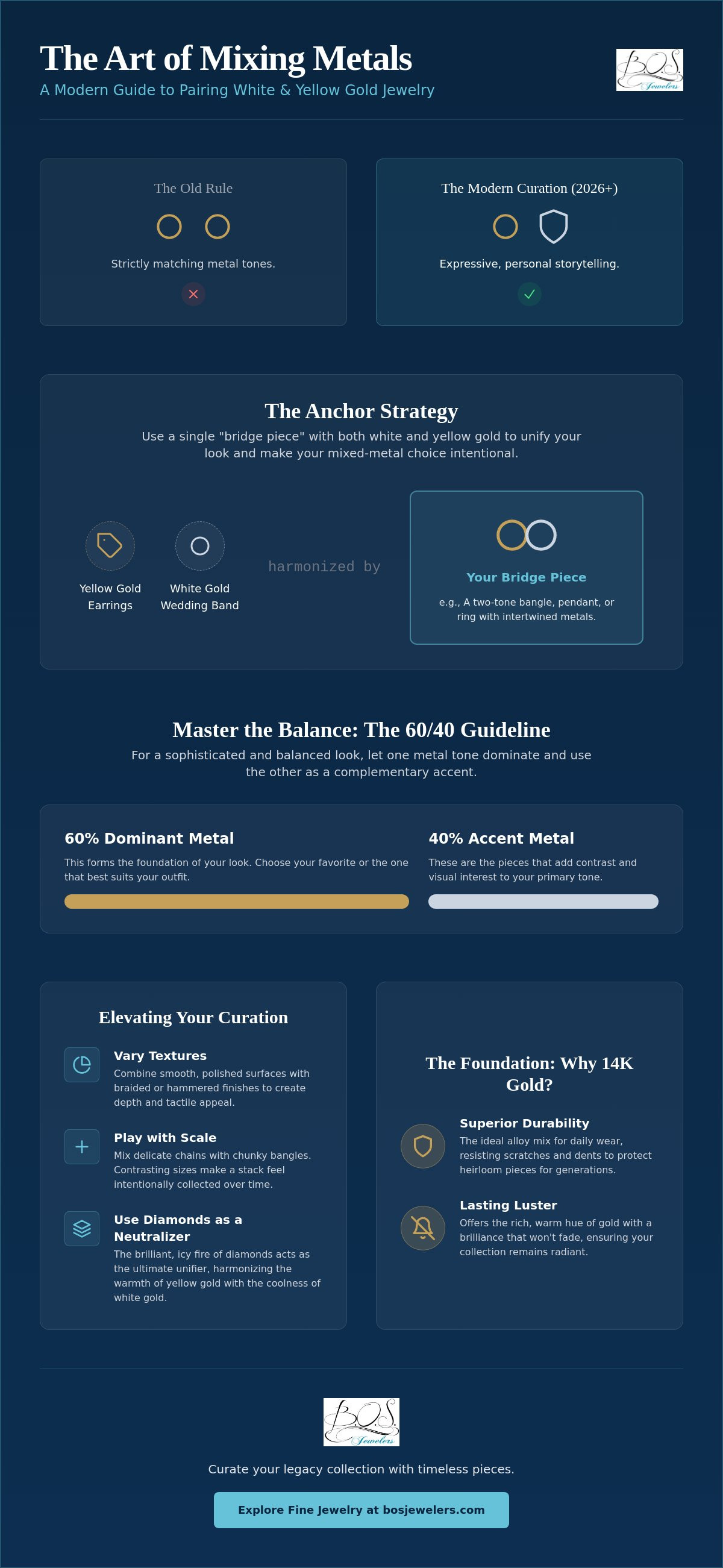
- Discover how to use a single "bridge piece" featuring both tones to anchor your look and create an intentional visual narrative.
- Master the 60-40 rule for mixing white and yellow gold jewelry to ensure your layered ensemble feels balanced and sophisticated.
- Understand the specialized care requirements for different gold alloys to maintain the lasting brilliance of your multi-tonal stack.
- Explore why 14K gold remains the premier choice for building a high-end collection that defies fleeting trends.
The Evolution of Mixed Metal Jewelry: Why the Old Rules No Longer Apply
The era of the monochromatic jewelry box has passed, making room for a more nuanced approach to luxury. For decades, the traditional standard demanded strict adherence to a single metal tone; if you wore a yellow gold necklace, your earrings and rings had to match. Today, we view these rigid "matching sets" as a relic of a less expressive time. Modern elegance is defined by the curated collection, a philosophy where your jewelry reflects a lifetime of moments rather than a single purchase from a showroom floor.
Mixed metal styling is the intentional combination of different gold alloys within a single ensemble. By mixing white and yellow gold jewelry, you unlock a level of versatility that allows your collection to transition seamlessly between diverse wardrobes and occasions. This approach ensures your favorite pieces aren't confined to specific outfits. Mixed metal curation is an expression of individual history rather than a trend.
The Shift Toward Personal Storytelling
We believe your jewelry should be as multi-faceted as your life. Perhaps you have a cherished 14K gold religious pendant from your grandmother, yet your partner proposed with a brilliant white gold diamond engagement ring. In the past, you might've felt forced to choose between them. Now, these pieces can live together in harmony. This shift toward personal storytelling allows you to celebrate "milestone jewelry" as it arrives. Whether it's a pair of 14K gold bangles added for an anniversary or a custom diamond nameplate to celebrate a new addition to the family, each piece finds its place. We prefer 14K gold for these collections because its composition offers the perfect balance of durability and lasting luster. When you understand the properties of gold alloys, it's clear why 14K gold remains the gold standard for pieces intended to be worn daily and passed down through generations.
Dispelling the "Clashing" Myth
The fear that different metals will "clash" often stems from a misunderstanding of color theory. White and yellow gold aren't rivals; they're complementary tones that provide depth and visual interest when paired. A mixed look feels more "lived-in" and authentic, suggesting a collection built with intention over time rather than one bought all at once. Diamonds serve as the ultimate neutral element in this equation. A diamond tennis bracelet or a pair of classic studs provides a bridge of pure brilliance that harmonizes different metal shades. The icy fire of a diamond reflects both the warmth of yellow gold and the crispness of white gold, pulling the entire look into a cohesive, high-end aesthetic.
The Anchor Strategy: Using Bridge Pieces to Create Cohesion
Every curated collection requires a foundation to feel intentional. We call this the "anchor strategy," a technique that relies on what we term a bridge piece. A bridge piece is a single item of jewelry that naturally contains both white and yellow gold elements within its design. When you are mixing white and yellow gold jewelry, this piece acts as a visual permission slip for the rest of your ensemble. It signals to the world that your choice to blend metals is a deliberate act of styling rather than a morning accident. By wearing one item that showcases both alloys, you create a rhythmic connection between your other single-tone accessories.
Scale is a critical factor when selecting your anchor. A more substantial bridge piece, such as a thick band or a heavy pendant, has the visual weight to anchor several smaller, single-tone items across your different "stations," such as your ears, neck, and wrists. We often suggest choosing bridge pieces with integrated diamonds. The natural fire of a diamond acts as a neutralizer, softening the transition between the sun-drenched warmth of yellow gold and the icy crispness of white gold. This brilliance creates a common language between the metals, pulling disparate pieces into a singular, high-end look.
Two-Tone Designs and Patterns
The beauty of two-tone 14K gold bangles lies in their ability to provide a constant point of reference within a stack. Braided or twisted designs are particularly effective because they physically interweave the gold colors, creating a texture that feels organic and purposeful. For a truly unique touch, custom diamond nameplates featuring mixed-metal accents can serve as a personalized anchor for your daily wear. These bespoke pieces combine the sentimental allure of a name with the sophisticated artistry of dual-tone 14K gold, ensuring your collection feels both prestigious and personal.
The Role of Texture in Metal Mixing
Texture is often the unsung hero of a sophisticated jewelry collection. Hammered, polished, or satin finishes can subtly distract the eye from metal color differences by changing how light interacts with the surface. This creates a cohesive aesthetic based on craftsmanship rather than just color matching. We also recommend utilizing diamond pavé settings to create what we call a "third tone" of pure light. When a surface is encrusted with diamonds, the underlying metal becomes a secondary detail, allowing the brilliance of the stones to bridge the gap between a yellow gold chain and a white gold ring. Ultimately, the quality of the 14K gold and the precision of the setting matter more than the specific shade of the metal.
How to Layer Mixed Metals Like a Connoisseur
Achieving a masterfully mixed look requires more than just wearing your favorite pieces at once; it demands a sense of rhythm and proportion. We recommend the 60-40 rule as your guiding principle for a sophisticated result. Choose one metal tone to serve as your primary foundation, making up the majority of your ensemble, while the second tone acts as a deliberate, thoughtful accent. This approach prevents your collection from looking cluttered and ensures that every piece feels like it belongs. By allowing one color to lead, you create a visual theme that feels grounded and intentional.
Distribution is equally vital for a cohesive aesthetic. We suggest spreading your metals across different "stations" of the body, including the ears, neck, wrists, and fingers. If you've chosen a yellow gold ring stack, consider balancing that warmth with a white gold necklace or a pair of diamond studs. Layering by proximity also allows you to create a beautiful gradient effect. By stacking rings of alternating colors on a single finger, you blur the lines between the tones and create a seamless transition. Layering is about balance, not symmetry.
Mastering the Wrist Stack
Your wrists offer a generous canvas for creative expression and experimentation. Combining 14K gold bangles in alternating colors creates a rhythmic, high-end aesthetic that captures the light from every angle. We often suggest the "sandwich" technique, where you place a warm yellow gold piece between two crisp white gold diamond tennis bracelets. This arrangement highlights the unique brilliance of each metal while maintaining a sense of luxurious unity. Don't forget your watch; it often serves as the perfect wild card to tie your entire wrist curation together.
Necklace Layering and Pendants
Mixing chain weights and lengths is essential for a clean, tangle-free appearance that looks professional and polished. It also provides an ideal opportunity for mixing white and yellow gold jewelry with confidence. Consider pairing a delicate white gold chain with a more substantial 14K gold religious pendant. The high contrast draws the eye directly to the center, creating a focal point of profound elegance and personal meaning. Utilizing a "V-shape" layering technique with multiple necklaces of varying lengths ensures that each individual piece has the space it needs to breathe and shine.
Maintaining the Brilliance of Your Mixed Collection
A curated collection of mixed metals is a living history, but its beauty relies on the technical health of each piece. The secret to successfully mixing white and yellow gold jewelry lies not just in the initial curation, but in the meticulous upkeep of each individual alloy. White gold achieves its signature icy brilliance through rhodium plating, a precious metal from the platinum family that requires periodic refreshing to maintain its cool luster. In contrast, yellow gold possesses a natural, warm glow that can dim under a layer of oils and daily wear. When these tones sit side-by-side, the contrast is what creates that high-end aesthetic; if one metal loses its brilliance, the entire ensemble feels less intentional.
We often see "metal bruising" occur when collectors mix pieces of varying hardness. By ensuring your stack consists primarily of 14K gold, you protect the longevity of your investment. 14K gold offers the ideal balance of purity and strength, preventing pieces from scratching or "bruising" one another as they move against your skin. It's also vital to monitor the prongs on your diamond engagement rings or tennis bracelets. Frequent contact between stacked items can lead to subtle shifts in the metal, potentially compromising the security of your stones. Regular inspections ensure that your diamonds remain safely cradled within their settings, preserving the artistry of the original design.
Professional Cleaning and Polishing
While home care is a wonderful habit, it rarely reaches the intricate crevices where different metals meet. The tight spaces between layered chains or the underside of a custom diamond nameplate are magnets for microscopic debris. Mixing white and yellow gold jewelry creates a dynamic look, but only if the contrast between the tones remains sharp and clean. Our professional jewelry cleaning and polishing services utilize specialized equipment to restore the distinct "pop" of each metal tone. This process doesn't just clean; it polishes away tiny surface scratches, ensuring your white gold stays crisp and your yellow gold remains radiant.
Technical Repairs for Daily Wear
The safety of your collection depends on a precise fit. We recommend professional ring resizing to ensure your stack stays exactly where it should, preventing pieces from spinning and causing unnecessary wear on the points of contact. When jewelry fits correctly, there's less friction on the clasps and bails of your layered necklaces. Our expert artisans are always on-site to check for thinning shanks or weakened prongs, providing the quiet reassurance that your most meaningful treasures are secure. If your collection has lost its signature sparkle, we invite you to visit us for an expert jewelry cleaning and polishing to bring your mixed-metal look back to life.
Curating Your Legacy with BOS Jewelers’ Fine Gold
Building a jewelry collection is an act of preservation. At BOS Jewelers, we've dedicated over 40 years to the art of 14K gold and diamond craftsmanship, serving as a pillar for our community and the families within it. Our commitment to quality is unwavering; we work strictly with 14K gold, ensuring that every piece possesses the durability and luster required to become a modern heirloom. We don't just sell jewelry. We partner with you to curate a legacy that reflects your personal history. When you are mixing white and yellow gold jewelry, having a knowledgeable guide ensures that each new addition harmonizes with the pieces you already hold dear.
We believe that the most beautiful collections are those that grow with you. Our expert artisans are present on the premises, ready to help you design bespoke items that bridge the gap between your existing treasures and your future aspirations. This collaborative process allows us to create pieces that feel like a natural extension of your identity. By focusing on superior materials and timeless design, we ensure that your curated look remains as radiant in several decades as it is today.
Symbolic and Religious Masterpieces
Faith and family often sit at the heart of a jewelry collection. Integrating gold religious pendants into a modern mixed-metal look adds a layer of profound meaning to your daily ensemble. A 14K gold cross or medallion serves as a powerful anchor piece, drawing the eye and providing a focal point for layered chains. These masterpieces are more than just accessories; they're expressions of devotion that transcend fleeting trends. Whether you choose a warm yellow gold medallion to contrast with a white gold stack or a diamond-encrusted pendant to unify different tones, faith-based jewelry remains a timeless centerpiece for any curation.
Bespoke Brilliance: Custom Diamond Nameplates
In the world of personalized luxury, few items are as impactful as custom diamond nameplates. These pieces have become the ultimate bridge in the art of mixing white and yellow gold jewelry. By choosing a specific gold tone for your custom design, you can intentionally match or contrast your most-worn pieces to create a sense of unity. We invite you to collaborate with our expert artisans to craft a nameplate that captures your story in 14K gold and brilliant diamonds. This milestone piece doesn't just fill a gap in your collection; it becomes the signature of your personal style, a handcrafted bridge between the tradition of our craft and the uniqueness of your life.
Embrace the Art of Personal Curation
Your jewelry collection is a living narrative of your life's most precious milestones. By embracing the art of mixing white and yellow gold jewelry, you move beyond the limitations of matching sets and into a space of sophisticated, personal curation. You've learned how anchor pieces provide visual harmony and why the 60-40 rule ensures your layered look remains balanced and intentional. These techniques transform a simple accessory into a statement of confidence.
At BOS Jewelers, we bring over 40 years of family-owned expertise to every piece we craft. We specialize exclusively in 14K gold and diamonds, offering the quality and durability your legacy deserves. Our expert on-site repair and custom design services ensure that your treasures remain as radiant as the day you first wore them. We don't just sell jewelry; we celebrate your history.
We invite you to Explore the BOS Jewelers Collection of 14K Gold and Diamonds and discover the pieces that will tell your story for generations to come. Your journey toward a more versatile, radiant wardrobe begins with a single, thoughtful choice.
Frequently Asked Questions
Can I wear a yellow gold wedding band with a white gold engagement ring?
What is a bridge piece in jewelry and why do I need one?
A bridge piece is a single item of jewelry designed with both white and yellow gold elements. You need one because it serves as the visual anchor for your entire collection, signaling that your choice to mix metals is deliberate. Whether it's a two-tone 14K gold bangle or a pendant with mixed accents, this piece provides the necessary harmony that allows disparate single-tone items to coexist beautifully within a single ensemble.
Does mixing white and yellow gold look cheap or accidental?
Mixing white and yellow gold jewelry looks sophisticated and high-end when you apply specific styling principles like the 60-40 rule. An accidental look usually happens when there's no dominant tone or a lack of clear distribution across your "stations." By intentionally choosing one metal to lead and using the other as a strategic accent, you elevate your look from a random assortment to a curated, professional gallery of your life’s milestones.
How do I start mixing metals if I only own yellow gold?
The best way to begin is by introducing a single white gold piece that features diamonds or a distinct texture. Diamonds act as a perfect neutralizer, reflecting both warm and cool tones to help bridge the gap between your existing yellow gold collection and new additions. You might consider a white gold diamond tennis bracelet to layer into your current stack of 14K gold bangles, creating a subtle yet impactful introduction to a multi-tonal aesthetic.
Is rose gold a good "third wheel" for mixing white and yellow gold?
Rose gold is an exceptional "third wheel" because its pinkish hue contains both the warmth of yellow gold and a softness that complements the crispness of white gold. Including a rose gold piece can soften the high contrast between white and yellow tones, creating a more gradual color gradient. This "tri-tone" approach is a hallmark of sophisticated 2026 curation, offering a rich, layered look that feels incredibly warm and personal.
Will my white gold jewelry need more maintenance if I wear it in a stack?
Your white gold pieces may require more frequent rhodium replating if they are constantly rubbing against other metals in a tight stack. Friction naturally wears down the protective plating that gives white gold its icy finish. We recommend regular professional cleaning and inspections to check for "metal bruising" and to ensure that the prongs holding your diamonds remain secure, especially in high-contact areas like your wrists and fingers.
Can I mix different gold karats, like 14K and 18K, in the same look?
You can mix different gold karats, though it's important to note that 18K gold is softer and typically has a more intense yellow hue than 14K gold. Because 14K gold is more durable, it's the ideal choice for daily-wear items like bangles or rings that frequently come into contact with other pieces. Mixing them is perfectly acceptable, but we suggest keeping the most delicate, higher-karat items in lower-impact areas like your ears or neck to prevent unnecessary wear.
How do I choose a dominant metal for my skin tone?
Choosing a dominant metal typically depends on your skin's undertones, with cool undertones favoring white gold and warm undertones shining in yellow gold. If you have a neutral undertone, you have the freedom to lead with either metal. However, mixing white and yellow gold jewelry actually makes your collection more versatile, allowing you to bridge the gap between your natural coloring and the specific tones of your favorite heirloom or milestone pieces.