

Lost Diamond from Your Ring: A Step-by-Step Guide
The first priority after a diamond goes missing isn’t choosing a replacement. It’s protecting the ring’s setting so a damaged prong or loose mount doesn’t put another stone at risk. If you’re wondering what to do if you lose a diamond from your ring, it’s natural to feel worried, especially when you don’t know whether the stone is nearby or the setting has been damaged.
A calm, careful response can help preserve your options. Stop wearing the ring, store it somewhere secure, and search likely areas without disturbing them further. Then arrange a professional inspection of the prongs and setting. This guide explains what to do next, whether you find the diamond or it remains missing, and how to consider repair, replacement, or an insurance inquiry. BOS Jewelers Inc is a family-owned business with over 40 years of experience in jewelry care, including technical repairs that help restore a ring’s security.
Key Takeaways
- Knowing what to do if you lose a diamond from your ring starts with protecting the setting and handling the ring gently.
- A missing stone doesn’t reveal why it came loose. An inspection can assess the prongs and setting before you decide on repairs.
- Whether the diamond is found, remains missing, or the setting appears damaged, the next steps depend on what an inspection reveals.
- Discuss the repair scope, how a recovered stone will be handled, and how to care for the ring afterward.
- Use the inspection findings to make a considered choice rather than rushing into repair or replacement.
Lost a Diamond from Your Ring? Take These First Steps
A missing diamond can be upsetting, especially when the ring carries a treasured memory. Pause before searching and focus first on preventing further damage. Avoid touching the empty setting more than necessary, and don’t wear the ring while you look for the stone.
What should you do immediately after noticing the missing diamond?
Remove the ring gently without bending the band or pressing on the empty setting. Place it in a small, secure container, such as a ring box, away from other jewelry. Until it’s inspected, avoid wearing it, flexing the band, or handling the prongs. Even light contact can disturb a setting that’s already loose or damaged.
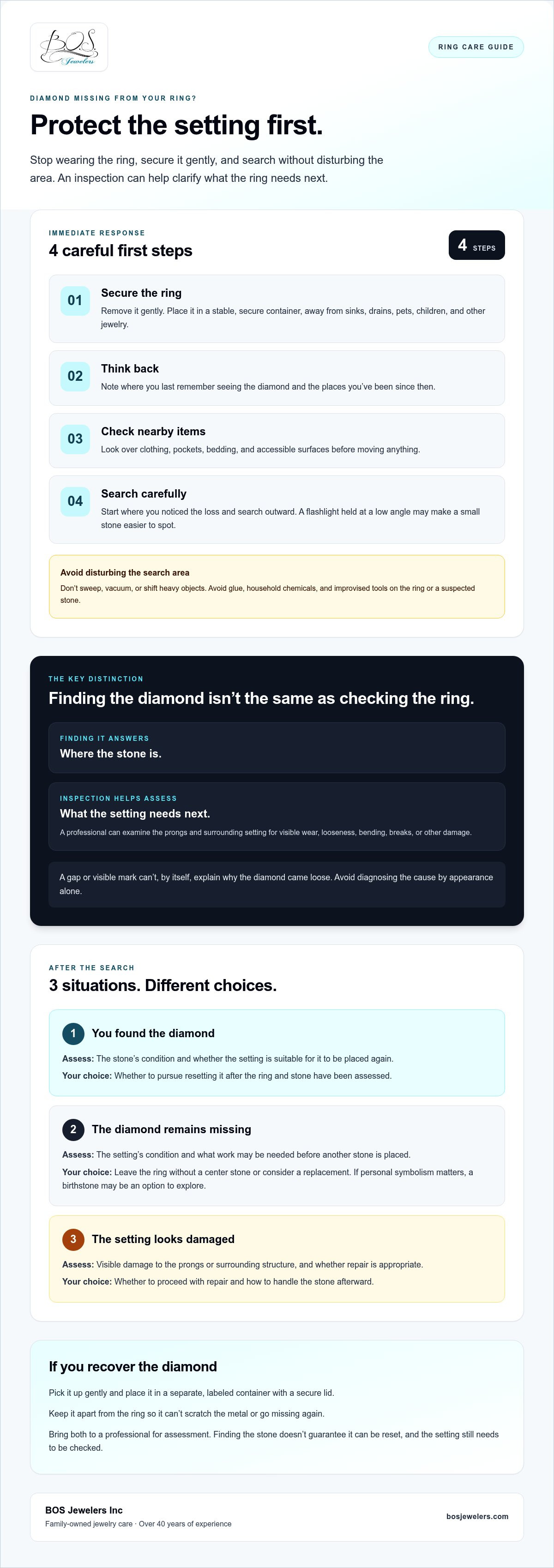
- 1. Secure the ring. Put it somewhere stable, away from sinks, drains, pets, and children.
- 2. Think back. Note where you last remember seeing the diamond and the places you’ve been since then.
- 3. Check nearby items. Look over clothing, pockets, bedding, and accessible surfaces before moving anything.
- 4. Search carefully. Use focused light to inspect the floor and nearby areas. Move slowly, and avoid sweeping, vacuuming, or shifting heavy objects that could scatter or crush the stone.
How can you search for a missing diamond safely?
Start where you noticed the loss, then search outward through places the ring may have touched. A flashlight held at a low angle can make a small stone easier to spot on a surface. Appearance alone can’t confirm that a clear stone is your diamond. For general background, see Diamond.
Don’t use glue, household chemicals, or improvised tools on the ring or a suspected stone. They can leave residue, cause damage, or complicate an inspection. If you find the diamond, pick it up gently and place it in a separate, labeled container with a secure lid. Keep it apart from the ring so it can’t scratch the metal or go missing again. Bring both to a professional for inspection. Even when the diamond is recovered, the setting still needs to be assessed.
Why Diamonds Fall Out of Rings, and What an Inspection Can Reveal
The setting is the part of a ring that holds its diamond in place. It may use prongs or another design to secure the stone, and its condition matters whether you’re considering the original diamond or a replacement. A gap where the diamond sat can show where it was held, but it can’t, by itself, explain why the stone came loose.
What can a jeweler check when a diamond is missing?
A professional inspection looks closely at the prongs and surrounding setting for visible wear, looseness, bending, breaks, or other damage. The jeweler can assess whether the area that held the diamond is sound enough for another stone to be set or whether repair work should come first. These findings inform your options; they don’t automatically determine which one you should choose.
Finding the diamond answers where it is; inspecting the setting helps determine what the ring needs next. That distinction matters even if you recover the stone, since it may not be safe to wear the ring until the setting has been assessed. BOS Jewelers Inc’s family-owned team brings over 40 years of experience to jewelry care, including on-site technical repairs such as professional prong repair.
Can you tell why the diamond fell out just by looking?
You might notice a bent prong or a mark around the empty space. Point out anything you see during an inspection, but don’t assume those signs prove exactly how or when the diamond was lost. The ring’s construction, the condition of its setting, and the stone’s former placement all inform a closer assessment. Part of knowing what to do if you lose a diamond from your ring is avoiding a diagnosis based on appearance alone.
Before the inspection, note any visible changes and where you last remember wearing the ring. This context can help guide the discussion, though it can’t confirm the cause of the loss. The inspection findings help clarify whether prong repair or other setting work is appropriate before you decide how to proceed.
Your Options If You Lose a Diamond from Your Ring
After the initial search, consider the ring’s condition separately from what you want to do about the missing stone. An inspection can clarify what the setting needs. Your preference then guides whether to pursue resetting a recovered diamond, consider a replacement, or leave the ring as it is for now.
| Situation | What can be assessed | Decision that remains yours |
|---|---|---|
| You found the diamond | The stone’s condition and whether the setting is suitable for it to be placed again. | Whether to pursue resetting after the ring and stone have been assessed. |
| The diamond remains missing | The setting’s condition and what work may be needed before a stone is placed. | Whether to leave the ring without a center stone or consider a replacement. |
| The setting looks damaged | Visible damage to the prongs or surrounding structure, and whether repair is appropriate. | Whether to proceed with repair and how you want to handle the stone afterward. |
What if you find the missing diamond?
Keep the diamond protected and bring it with the ring for assessment. Finding the stone doesn’t guarantee it can be reset. Both the diamond’s condition and the setting’s suitability need to be considered before you decide whether to restore the ring with its original stone.
What if the diamond is still missing?
You can address the setting first and consider a replacement separately. If personal symbolism matters to you, a birthstone may be another option to explore. Gemstones vary in durability and in how well they suit different settings and patterns of wear, so discuss the specific stone and intended use before choosing. A birthstone can carry personal meaning, much as people find meaning in religious jewelry such as 14K gold religious pendants, but not every gemstone is suited to every ring.
If you have jewelry insurance, review your policy documents and ask your insurer about coverage and claim steps. The terms depend on your individual policy, so don’t assume repair or replacement will be covered. For help understanding your ring’s repair needs, explore BOS Jewelers Inc’s ring repair services. The family-owned team brings over 40 years of jewelry experience to technical repairs, including prong repair.
How to Repair and Protect Your Ring After Diamond Loss
Once the ring has been examined, the inspection findings can guide a repair plan. If a prong is worn, loose, or damaged, prong repair may be appropriate. Other setting work may be recommended depending on the ring’s construction and condition. The aim is to address what the inspection reveals before wearing the ring again, rather than assuming every missing diamond calls for the same repair.
How does professional prong repair fit into the next steps?
Prongs help hold a stone in place, so repair may be appropriate when an inspection identifies a problem with their condition or security. BOS Jewelers Inc provides technical jewelry repairs, including prong repair. Before work begins, discuss what the inspection found, which parts of the setting need attention, and whether a recovered diamond can be considered for resetting. The repair plan should reflect the condition and construction of your ring.
It’s also reasonable to discuss how the stone will be handled during the work and what care the ring may need afterward. If the diamond hasn’t been found, you can consider setting repair separately from any decision about a replacement. You remain in control of whether and when to move forward.
How can you reduce the chance of another lost stone?
Pay attention to changes in the ring. If a stone seems loose, a prong looks visibly damaged, or the setting feels different, stop wearing the ring and have it assessed rather than testing it yourself. Periodic attention can help you notice changes, though there isn’t one inspection schedule that suits every ring.
Consider removing the ring during activities where it could be struck or snagged, such as lifting, gardening, or handling equipment. A ring that shifts or spins may be uncomfortable or more likely to catch on something; its fit can be discussed as part of an overall assessment. If you’re deciding what to do if you lose a diamond from your ring, an inspection is a practical starting point for understanding the repair needs.
BOS Jewelers Inc’s family-owned team brings over 40 years of experience to jewelry care and technical repairs. Discuss your ring repair with BOS Jewelers Inc and take a considered next step toward caring for a piece that matters to you.
Take the Next Step Toward a Secure Ring
A missing diamond can be unsettling, but you can respond carefully. Knowing what to do if you lose a diamond from your ring begins with protecting the setting, searching thoughtfully, and resisting the urge to diagnose the cause before the ring is examined.
Whether you recover the stone or not, an inspection can help clarify the condition of the prongs and setting. From there, you can consider suitable repairs, discuss whether a stone may be reset or replaced, and review your insurance policy if you have questions about coverage. The decision remains yours, guided by the ring’s condition and what matters most to you.
At BOS Jewelers Inc, our family-owned team brings over 40 years of experience to jewelry care, including on-site technical repairs such as prong repair and ring resizing. Explore BOS Jewelers Inc’s ring repair services and take a thoughtful step toward caring for your treasured ring.
Frequently Asked Questions
What should I do first if a diamond falls out of my ring?
Take the ring off carefully and stop wearing it until the setting has been assessed. Place it in a small, secure container, then search nearby clothing and surfaces with focused light. Move slowly and avoid sweeping or vacuuming, which could scatter the stone. If you find the diamond, store it separately in a labeled container and bring it with the ring for inspection.
Can a jeweler tell why the diamond fell out?
A jeweler can examine the prongs and surrounding setting for visible wear, looseness, or damage, but those signs may not establish exactly how the diamond was lost. The ring’s construction and condition help inform the assessment. An inspection can clarify whether prong repair or other setting work may be appropriate, without assuming the cause from the empty setting alone.
Can a lost diamond be put back into the ring if I find it?
Possibly, but finding the diamond doesn’t guarantee it can be reset. The stone and the ring’s setting need to be assessed, including whether the setting is secure and suitable for the stone. Keep the diamond protected and separate from the ring until they can be examined together. The assessment can help you understand whether resetting is an option or whether further setting work should come first.
What happens if the diamond is missing and the ring setting is damaged?
Have the setting examined before wearing the ring or deciding on a replacement stone. A jeweler can assess visible damage to the prongs and surrounding structure, then explain what repair work may be appropriate. The decision to repair the setting, replace the diamond, or consider another option remains yours. Assessing the setting separately helps you make an informed choice about the missing stone.
Does insurance cover a lost diamond from a ring?
Coverage depends on the terms of your individual policy, so a lost diamond isn’t automatically covered. Review your policy documents and contact your insurer to ask whether the loss is covered and what documentation or steps may be required. Keep any relevant receipts, appraisals, or records available. Your insurer can explain your policy and claim process; a jeweler can assess the ring’s repair needs.
How can I tell if the prongs on my ring need repair?
Visible bending, a broken or worn-looking prong, or a stone that seems loose can signal that the setting needs attention. Don’t test a prong by pressing or pulling on it, and stop wearing the ring if you notice a change. A professional inspection can assess the prongs and surrounding setting. BOS Jewelers Inc provides technical jewelry repairs, including prong repair, to address the needs identified during an assessment.