

Jewelry Insurance Guide for Engagement Rings: Protecting Your Legacy in 2026
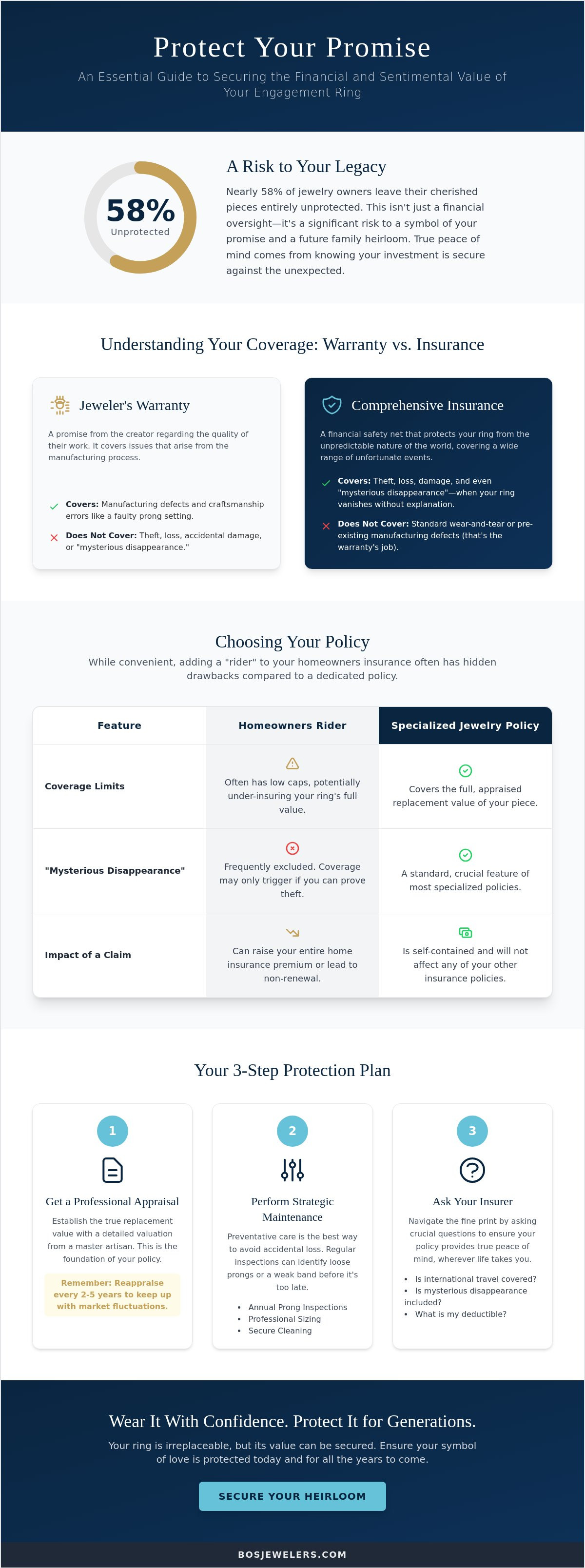
Did you know that nearly 58% of jewelry owners currently leave their most cherished pieces entirely unprotected? For an engagement ring, this isn't just a financial oversight; it's a significant risk to a piece of your family's future history. We understand that your ring is far more than a collection of carats and precious metal. It's a symbol of a promise and a cornerstone of your legacy. You deserve to wear it with joy every day, rather than with a lingering fear of a lost stone or a misplaced band.
Learning how to protect your diamond engagement ring shouldn't involve drowning in insurance jargon or feeling uncertain about the appraisal process. We'll help you master these complexities with a clear roadmap to securing both the financial and sentimental value of your investment. This guide explores the benefits of specialized "all-risk" coverage and the necessity of reappraising your jewelry every two to five years to keep pace with market shifts. By moving from confusion to clarity, you'll ensure your ring remains a brilliant, protected part of your story for generations to come.
Key Takeaways
- Understand the vital distinction between a jeweler’s warranty and a comprehensive insurance policy to ensure your ring is protected against theft and loss.
- Evaluate the advantages of specialized jewelry insurance over standard homeowners riders to secure superior claims handling and broader coverage limits.
- Discover how to protect your diamond engagement ring through meticulous preventative care, such as professional resizing and prong inspections, to avoid accidental loss.
- Gain clarity on the appraisal process and why a detailed valuation from a master artisan is essential for establishing the true replacement value of your heirloom.
- Prepare a list of essential inquiries for your insurer, focusing on international protection and mysterious disappearance, to ensure peace of mind wherever life takes you.
The Emotional and Financial Case for Engagement Ring Insurance
Your engagement ring is more than a brilliant arrangement of 14K gold and diamonds; it's the physical manifestation of a life-altering promise. While the romantic allure of the piece is what you carry in your heart, the practical reality of its value requires the quiet confidence of a seasoned expert's protection. Understanding how to protect your diamond engagement ring begins with recognizing that fine jewelry is a significant financial asset that deserves a dedicated safety net. It's a partnership between your personal history and professional financial security.
Jewelry insurance functions as a specialized branch of property and casualty insurance. Unlike general coverage, these policies are crafted to address the unique risks associated with high-value personal items. The most vital feature to look for is the "mysterious disappearance" clause. This specific coverage protects you if your ring simply vanishes, perhaps slipping off during a sunset swim or being left behind in a dressing room. These are scenarios where no evidence of theft exists, yet the loss is just as devastating. Balancing the sentimental weight of your ring with the reality of replacement costs ensures that your legacy remains intact, even when the unexpected occurs.
Insurance vs. Warranty: Knowing the Difference
Many couples mistakenly believe a jeweler's warranty is sufficient protection. It's vital to understand that a warranty is essentially a promise regarding craftsmanship. It covers manufacturing defects, such as a structural flaw in the 14K gold or a stone that was improperly set. If you need a prong repair due to a workshop error, a warranty is your primary resource. However, a warranty won't replace your ring if it's stolen or lost during international travel. Insurance covers the unpredictable nature of the world at large. You need both to fully safeguard your investment, using the warranty for maintenance and insurance for catastrophe.
The Risk of Under-Insuring Your Fine Jewelry
The value of precious metals and high-grade diamonds is rarely static. Market fluctuations can significantly alter the replacement cost of your bespoke piece within just a few years. Relying on an outdated sales receipt or a generic homeowners policy limit often leads to a painful realization during a claim. Standard policies frequently cap jewelry payouts at a level far below the value of a high-quality diamond. To truly master how to protect your diamond engagement ring, you must ensure your coverage reflects current market realities. Proper valuation bridges the gap between the price you paid and the cost of recreating that same brilliance today, especially for the intricate artistry inherent in 14K gold settings.
Comparing Coverage: Homeowners Riders vs. Specialized Jewelry Policies
Selecting the right vehicle for your protection is as vital as the selection of the stone itself. Most people start with their existing homeowners or renters insurance, often adding what's known as a "rider" or "floater." While this path offers the simplicity of a single monthly bill, it frequently comes with hidden limitations that only surface when you need help most. We believe that true peace of mind comes from understanding exactly how your policy will perform when life becomes unpredictable.
The Homeowners Policy Rider
For many, the initial appeal of a homeowners rider is convenience. It's often the quickest way to address how to protect your diamond engagement ring immediately after the proposal. However, these extensions usually carry strict coverage caps. If your ring is valued significantly higher than the standard limit, you're essentially self-insuring the difference. Perhaps the most significant drawback is the potential impact on your primary policy. Filing a claim for a lost ring could lead to an increase in your overall home insurance premiums or even a non-renewal of your entire policy. You should also verify if your rider includes "mysterious disappearance," as many standard policies only trigger coverage if you can prove a theft occurred.
Dedicated Jewelry Insurance Providers
Specialized insurers operate with a different philosophy, viewing your jewelry as a unique asset rather than just "unscheduled property." These providers have deep expertise in diamond engagement rings and the nuances of high-grade 14K gold. One major advantage is the flexibility they offer. Should you need a replacement, specialized policies often allow you to work directly with your trusted jeweler rather than a liquidator chosen by the insurance company. This ensures that the replacement matches the original artistry and quality of your piece. Specialized policies are also generally more lenient with incidents that occur away from home, such as during an international anniversary trip.
When evaluating these options, it's helpful to review specific questions to ask your insurer regarding their claims process. You'll want to confirm if they offer "actual replacement value" coverage. A cash payout sounds appealing, but it often fails to cover the true cost of recreating a bespoke item during periods of market volatility. To keep your ring in peak condition for future appraisals, consider a professional jewelry cleaning and polishing to maintain its brilliant luster. This expert care doesn't just preserve the beauty of your investment; it ensures that every detail is documented and pristine for your records.
The Professional Appraisal: Securing a Valid Valuation for Your Diamond
While your sales receipt captures a beautiful moment in time, it's an insufficient tool for long-term security. A receipt merely reflects what you paid at a specific date; it doesn't account for the shifting tides of the global market or the intricate details required to recreate a bespoke piece. To truly master how to protect your diamond engagement ring, you must secure a professional appraisal. This document serves as the definitive blueprint for your jewelry, ensuring that your insurer understands the precise "Indistinguishable Kind and Quality" required for a replacement. Without this level of detail, you risk receiving a settlement that fails to match the artistry and caliber of your original 14K gold setting.
The role of a certified gemologist is central to this process. These experts look far beyond the surface, evaluating the structural integrity and the unique "fingerprint" of your stone. According to verified industry data for 2026, a professional appraisal typically costs between $95 and $125 for a single ring. It's vital to work with an appraiser who charges a flat fee or hourly rate rather than a percentage of the jewelry's value. This ensures an unbiased valuation that focuses solely on the technical specifications of your 14K gold and diamonds. This meticulous documentation acts as a bridge between the romantic allure of your ring and the technical requirements of a robust insurance policy.
What a Comprehensive Appraisal Includes
A valid appraisal is a rich, descriptive narrative of your jewelry's composition. It should provide a deep dive into the 4 Cs of your diamond, alongside a precise measurement of the 14K gold weight. You should expect the following elements in a high-quality report:
- Detailed Grading: A breakdown of color, clarity, cut, and carat weight, often verified against GIA or EGL reports.
- Macro-Photography: High-resolution imagery and internal plotting that identify the unique inclusions within your diamond.
- Material Specifics: A clear distinction between natural and lab-grown diamonds, as this significantly impacts valuation in the current market.
- Craftsmanship Notes: Documentation of the setting style and any custom design elements that define your ring's character.
How Often Should You Re-Appraise?
The value of fine jewelry is rarely static. With gold prices seeing sharp increases in early 2026, an appraisal from five years ago likely leaves you significantly under-insured. We recommend having your high-value pieces reappraised every 2 to 5 years. This frequency allows you to adjust your coverage to reflect the current replacement cost, rather than a historical purchase price. Regular updates ensure that your premium remains accurate and that your financial protection keeps pace with the rising value of your handcrafted 14K gold and diamond treasures.
Crucial Inquiries for Your Insurer: Navigating the Fine Print
Securing a policy is a significant step, but the true strength of your coverage lies in the specific language of the contract. You shouldn't assume that every policy acts as a universal shield. To truly understand how to protect your diamond engagement ring, you must engage in a transparent dialogue with your provider. This ensures that the sentimental and financial value you've worked so hard to document is actually protected when life takes an unexpected turn. A policy that covers theft but ignores accidental loss leaves a wide gap in your family's security.
Annual premiums in 2026 typically range from 1% to 2% of the ring's appraised value. This investment should buy you more than just a piece of paper; it should buy you a partnership. You need to know if your coverage follows you across borders. If you lose your ring during an anniversary trip abroad, will your insurer facilitate a global claim? Always ask for a clear definition of "mysterious disappearance." This clause is your primary defense against those heart-stopping moments when a ring simply isn't where you last placed it.
Defining the Scope of Coverage
Inquire specifically about partial losses. If a single stone falls out of your diamond tennis bracelet or engagement setting, does the policy cover the replacement of that individual gem? You should also evaluate how your deductible choice influences your payout. A higher deductible can lower your annual costs, but it must be an amount you're comfortable paying during a stressful moment of loss. Be aware that most policies distinguish between sudden accidental damage and gradual wear and tear. While a crushed setting from an accident is usually covered, thinning prongs from decades of wear are often considered a maintenance responsibility.
The Claims Process and Replacement Rights
The most critical question you can ask is whether you have the right to choose your own jeweler. Many standard insurers prefer to work with their own network of high-volume replacement centers. However, for a bespoke piece or a custom 14K gold nameplate, you want the original artisans who understand the soul of the work. Ensure your policy includes a clause that allows for "like kind and quality" replacement by a master jeweler of your choice. This guarantee ensures that the craftsmanship of your new piece will match the brilliance of the original.
If you are uncertain about the current state of your setting or need to document its condition for a new policy, we invite you to visit us for professional ring resizing and prong repair. Ensuring a flawless fit is one of the most effective ways to prevent a claim before it ever happens.
Strategic Maintenance: How Expert Care Safeguards Your Policy
While the paperwork of an insurance policy provides a vital financial safety net, the physical stewardship of your ring is what truly ensures its longevity. A ring is a living legacy, meant to be worn and admired, but daily life can be demanding on 14K gold and precious stones. Understanding how to protect your diamond engagement ring involves a commitment to regular maintenance that mirrors the meticulous nature of its original creation. Proactive care doesn't just keep your jewelry brilliant; it serves as documented proof to your insurer that you are a responsible guardian of your asset. This diligence can be the deciding factor in the smooth processing of a future claim.
Insurers often view jewelry through the lens of risk management. If a diamond is lost because a prong was visibly thinned or bent over several years of neglect, an insurance adjuster might question the validity of the claim. By scheduling professional jewelry cleaning and polishing at least twice a year, you create a history of expert oversight. These sessions allow a master jeweler to examine the structural integrity of your piece under magnification, identifying micro-fractures or loose settings before they escalate into a total loss. Documenting these visits provides a clear trail of preventative care that strengthens your standing with your insurance provider.
The Importance of Periodic Inspections
During a professional inspection, we look for signs of wear that the naked eye often misses. Thinning shanks and worn-down prongs are the most common culprits behind accidental stone loss. Identifying the need for a prong repair early is far more cost-effective than replacing a center stone. Beyond the security of the setting, professional cleaning removes the microscopic buildup of oils and debris that can hide structural damage. A pristine ring is easier to inspect, ensuring that every point of contact between the metal and the diamond is secure and stable.
Safe Storage and Travel Tips
When your ring isn't gracing your finger, its environment remains critical to its safety. Never leave your jewelry on a bedside table or near a sink where it can be easily misplaced or knocked into a drain. We recommend a dedicated, fabric-lined jewelry box or a secure home safe. If you find your ring is slipping or feels loose during different seasons, professional ring resizing is an essential preventative measure. A properly fitted band is significantly less likely to slide off unnoticed during daily activities or while traveling. For international journeys, consider whether the destination warrants wearing your original piece or if it should remain in a secure vault while you carry the memories instead. Your legacy is precious; treating it with consistent, expert care ensures it remains a protected part of your family's story for generations.
Securing Your Promise for Generations
True peace of mind comes from knowing that your most cherished symbol is shielded by more than just hope. By combining a specialized insurance policy with meticulous professional appraisals, you ensure that the financial and sentimental value of your investment remains intact. Mastering how to protect your diamond engagement ring requires a dedicated partnership between your personal care and the expertise of a master jeweler. From maintaining the integrity of your 14K gold setting to documenting the unique brilliance of your stone, every step you take today preserves your legacy for the future.
At our family-owned establishment, we bring over 40 years of expertise to every piece we touch. Our on-site master jewelers specialize in 14K gold and high-quality bridal jewelry, providing the precise appraisals and technical prong repairs needed to safeguard your policy. We invite you to Explore our collection of Diamond Engagement Rings and secure your legacy today. Let us help you celebrate your milestone with the quiet confidence that your story is protected by artisans who value craftsmanship as much as you do. Your journey is beautiful, and we're honored to help you keep it brilliant.
Common Questions About Engagement Ring Protection
How much does engagement ring insurance typically cost per year?
Annual insurance premiums generally range from 1% to 2% of your ring's appraised value. For a piece valued at $5,000, you can expect to pay between $50 and $100 each year. These rates are influenced by your geographic location, the specific deductible you select, and the type of coverage provided by your insurer.
Is my engagement ring covered by my homeowners insurance automatically?
Standard homeowners and renters policies often provide very limited protection for fine jewelry, typically capping theft coverage at $1,000 to $1,500. This is rarely sufficient for a high-quality diamond or a custom 14K gold setting. To ensure full financial protection, you should add a specific scheduled rider to your policy or opt for a specialized standalone provider.
What happens if I lose my engagement ring while traveling abroad?
Your coverage during international travel depends on whether your policy includes worldwide protection. Many specialized jewelry insurers offer global coverage that follows you across borders, while standard homeowners riders may have geographic restrictions. It's vital to verify these terms before you depart to ensure your legacy remains secure wherever your journey leads.
Do I need a new appraisal if the price of gold goes up?
Fluctuations in the market value of gold and diamonds definitely warrant a fresh appraisal to avoid being under-insured. We recommend a professional valuation update every 2 to 5 years. This ensures your policy reflects the current replacement cost, which is especially important given the sharp increases in precious metal prices seen in early 2026.
Can I insure an heirloom ring that was passed down to me?
You can certainly insure a cherished heirloom once you have obtained a professional appraisal from a certified gemologist. This document establishes the ring's current market value and documents its unique technical specifications. Insuring a family treasure is a beautiful way to honor its past while ensuring its brilliance continues for future generations.
What is mysterious disappearance coverage in jewelry insurance?
Mysterious disappearance coverage protects you if your ring simply vanishes without any evidence of theft or a specific accident. This is a crucial element for those learning how to protect your diamond engagement ring, as it covers the most common loss scenarios. Without this clause, you may find yourself unprotected if your ring slips off unnoticed during daily wear.
Will my insurance pay for a diamond that fell out of my ring?
Most "all-risk" policies will cover the replacement of a diamond that has fallen out of its setting due to sudden accidental damage. While regular maintenance like prong retipping is your responsibility, the loss of the stone itself is typically a covered peril. Keeping a record of professional inspections can help demonstrate that the loss was not due to long-term neglect.
How do I file a claim if my engagement ring is stolen?
Filing a claim begins with securing a formal police report and then contacting your insurance provider immediately. You will need to provide your professional appraisal and any original sales receipts to establish the ring's value and quality. Having these documents organized in advance ensures a smoother process as you work with your master jeweler to recreate your bespoke piece.