

How to Remove Scratches from a Gold Ring: A Professional Guide to 14K Restoration
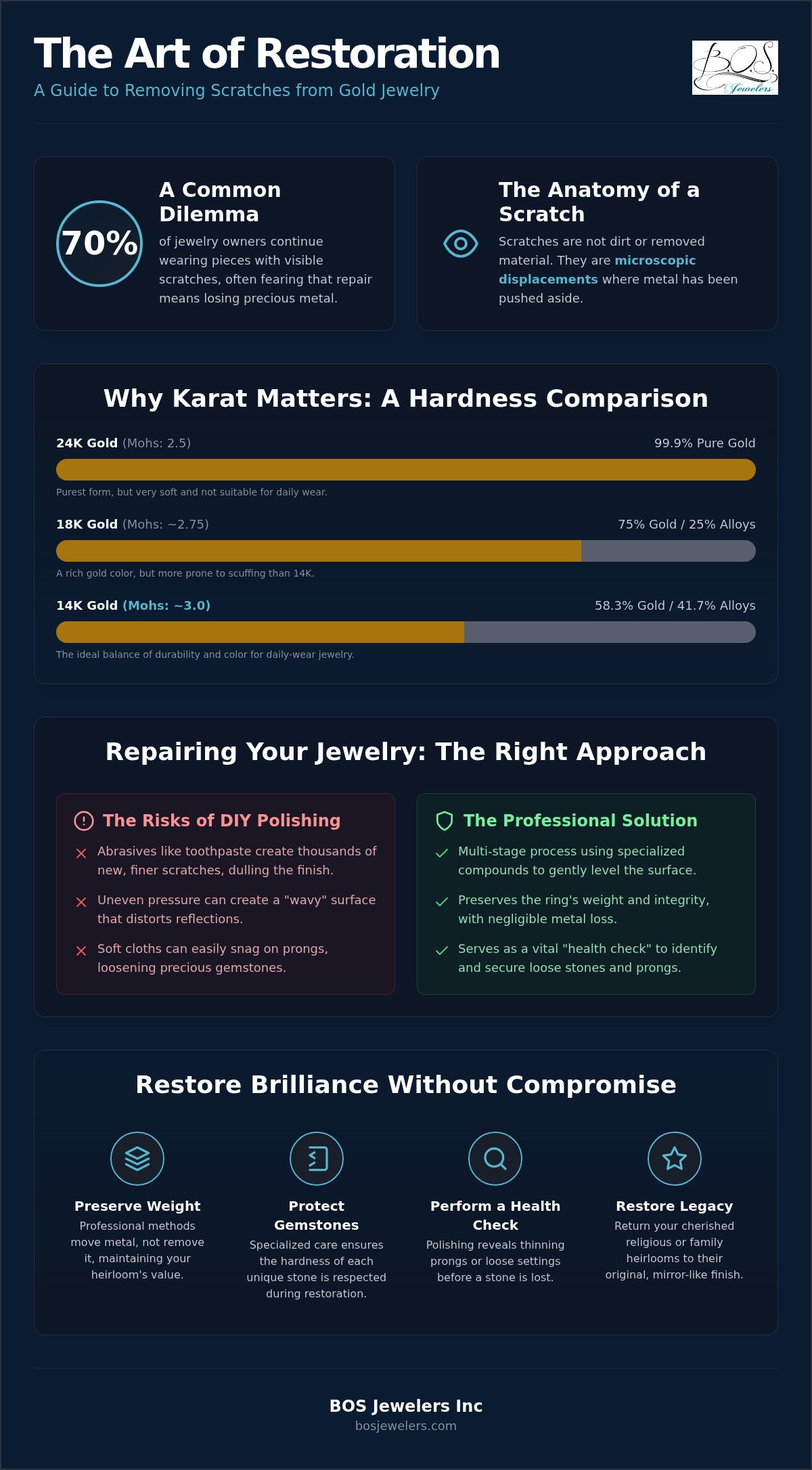
Nearly 70% of jewelry owners continue to wear their cherished pieces for months despite visible wear, often because they fear that learning how to remove scratches from a gold ring might mean losing some of the precious metal itself. It's a deeply personal concern, particularly when that ring is a 14K gold heirloom or a religious piece that carries the weight of your family's history. You long to see that brilliant, mirror-like finish return, yet you hesitate to risk the structural integrity or the delicate settings of your birthstones.
At BOS Jewelers Inc, we believe restoration is a celebratory act that honors the milestones your jewelry represents. We'll share the expert techniques we've refined over forty years of heritage craftsmanship to help you achieve a flawless surface while preserving the soul of your ring. You'll discover the vital differences between 14K and 24K durability, the specialized care required for white gold versus yellow gold, and how to choose a repair method that restores brilliance without compromise. From understanding the nuances of professional polishing to protecting your most precious gemstones, this guide provides the confidence you need to care for your collection.
Key Takeaways
- Learn why scratches are actually microscopic displacements of metal rather than surface dirt, requiring specific restorative techniques rather than simple cleaning.
- Understand the limitations of home remedies and discover how to remove scratches from a gold ring through professional methods that preserve the piece's structural weight.
- Explore how the unique hardness of your birthstones and diamonds dictates the specific heat and pressure levels used during a safe restoration process.
- Discover how professional polishing serves as a vital health check for your religious heirlooms by identifying thinning prongs and loose stones before they are lost.
Understanding Why 14K Gold Rings Develop Scratches
Your 14K gold ring is more than a simple accessory; it's a companion that witnesses every gesture of your daily life. Over time, you might notice the once-perfect surface losing its luster. While many mistake this for dirt, these marks are actually microscopic displacements of metal. When an object harder than gold strikes the surface, it doesn't always "remove" the gold. Instead, it pushes it aside like a furrow in a field. Understanding this displacement is the first step in learning how to remove scratches from a gold ring while maintaining its weight and value.
Much like a fine piece of jewelry, a bespoke accessory can become a signature part of your daily look; for those who appreciate unique craftsmanship, you can check out Busto & Sun for handcrafted hats that blend Italian tradition with a modern lifestyle.
On the Mohs scale of mineral hardness, 14K gold typically ranks between 2.5 and 3. This makes it significantly more resilient than pure 24K gold, which is far too soft for the rigors of daily wear. We achieve this durability by blending pure gold with stronger alloys such as copper, silver, and zinc. These additions provide the structural integrity needed for intricate religious pendants or engagement bands. Even with these alloys, common activities like gripping a steering wheel, gardening, or even using certain Jewellery cleaning methods that are too abrasive can cause "micro-marring" on high-polish surfaces.
14K vs. 18K Gold: Which Scratches Faster?
The ratio of gold to alloy directly dictates how vulnerable your jewelry is to surface wear. 18K gold contains more pure gold, making it softer and more prone to scuffing than its 14K counterpart. This is why 14K gold remains our preferred standard for daily-wear items like religious rings and family crosses. Over years of wear, your ring will develop a unique "patina." This soft, satiny glow is actually a collection of thousands of tiny surface marks that tell the story of your life's milestones and daily devotion.
The Anatomy of a Scratch: Surface vs. Deep Gouges
Not all marks are created equal. Light surface scuffs are purely aesthetic concerns, but deep structural gouges can be more serious. A deep scratch near a prong or gemstone setting might compromise the security of your diamonds or birthstones. We often see a "burnishing" effect in professional restoration, where metal is carefully moved back into place rather than sanded away. This ensures your sentimental heirlooms retain their original volume and strength. Knowing how to remove scratches from a gold ring effectively involves recognizing when a mark is just a memory and when it's a threat to the piece's longevity.
Evaluating DIY Cleaning vs. Professional Scratch Removal
While a gentle bath of mild soap and warm water works wonders for removing oils and dust from your daily-wear items, it's a common misconception that cleaning is the same as restoration. Soap and water have zero effect on the physical displacements we call scratches. Even a specialized jeweler's cloth, while excellent for maintaining a light glow on your religious pendants, lacks the mechanical power to level out deeper scuffs. Understanding how to remove scratches from a gold ring requires recognizing the difference between surface grime and structural marring. If you're researching how to polish gold, it's vital to understand the boundary between routine care and professional resurfacing.
The Risks of At-Home Polishing Kits
At-home kits often promise a quick fix, yet they carry hidden dangers for sentimental heirlooms. Abrasive household staples like toothpaste or baking soda act like sandpaper, introducing thousands of new, finer scratches that dull the finish rather than brightening it. Without the steady hand of an artisan, DIY pressure often leads to an uneven, "wavy" surface that catches the light poorly. Additionally, soft cloths can easily snag on the delicate prongs of your birthstone settings, potentially loosening a sapphire or diamond without you noticing. These small errors can turn a simple aesthetic touch-up into a costly repair.
What Happens During a Professional Polishing Session
Learning how to remove scratches from a gold ring at a professional bench involves a multi-step journey toward perfection. We begin with an ultrasonic cleaning to remove every trace of debris, followed by the use of high-speed buffing wheels and specialized compounds like rouge. These compounds gently move the gold back into place, leveling the surface without compromising the ring's integrity. Many clients worry about "losing gold" during this process, but the amount of metal removed is truly negligible, often less than the weight of a single grain of sand.
We meticulously maintain the sharp edges and intricate details of your 14K gold religious jewelry for women, ensuring the piece looks exactly as it did the day you first wore it. Often, when clients visit us for ring resizing, we include this comprehensive polishing as part of the service to return the piece to its full glory. If your favorite band has lost its luster, the artisans at BOS Jewelers Inc provide the jewelry polishing and cleaning expertise needed to restore that original radiance.
Protecting Birthstones and Gemstones During the Polishing Process
A fine 14K gold ring is rarely just a band of metal; it is often a protective home for a precious birthstone or a brilliant diamond. When you seek to learn how to remove scratches from a gold ring, you must consider the vulnerability of the stone it carries. Gemstones possess varying degrees of hardness on the Mohs scale, and this single factor dictates the safety of the restoration process. While a diamond can withstand the high-speed friction and heat of a professional buffing wheel, other gems require a far more delicate touch to avoid permanent damage.
Soft birthstones like opals, pearls, or emeralds are particularly susceptible to the vibration and pressure used during scratch removal. Heat generated by the polishing wheel can cause internal inclusions in emeralds to expand, potentially shattering the stone from within. We always perform a meticulous inspection of your gemstone settings before and after the polishing process. The vibration of a high-speed wheel can occasionally shift a stone or loosen a prong, making it essential for an expert to re-tension the setting once the luster is restored.
Hardness Matters: Diamonds vs. Colored Gemstones
The Mohs scale provides a clear roadmap for jewelry care. Diamonds sit at a perfect 10, while sapphires and rubies follow closely at 9. These stones are resilient enough to handle standard polishing compounds. However, emeralds rank at 7.5 and often contain natural oil treatments that heat can destroy. When we work on pieces with these more fragile stones, we utilize "masking" techniques to protect the gem while focusing the restoration on the gold. This ensures the metal shines without risking the integrity of your most precious colors. Heat from a polishing wheel can expand fluid-filled inclusions in certain gems, leading to internal fractures if not managed by a professional.
Maintaining the Brilliance of Religious Jewelry
The intricate details found on gold religious pendants and rings present a unique challenge. These pieces often feature deep textures and symbolic engravings that require a steady hand to preserve. High-speed machine polishing might erode the fine lines of a crucifix or a saint's image if handled by an amateur. In many cases, we find that meticulous hand-polishing is superior for these highly textured religious pieces. This method allows us to address how to remove scratches from a gold ring while honoring the artistry and faith embedded in the design.
If you have a cherished heirloom featuring delicate birthstones, our artisans at BOS Jewelers Inc provide the expert care needed to restore beauty while ensuring total gemstone security.
Professional Polishing: Restoring the Legacy of Your Fine Jewelry
Your jewelry is a living history of your most sacred moments. Whether it is a cross passed down through generations or a diamond engagement ring that marks the start of your journey, these pieces deserve more than just a surface wipe. Professional restoration is a celebratory act that ensures your 14K gold legacy remains vibrant for your children and grandchildren. By entrusting your treasures to a master artisan, you aren't just learning how to remove scratches from a gold ring; you're investing in the longevity of the piece itself.
A professional session offers a brilliance that home methods simply cannot replicate. Beyond the mirror-like finish, the most critical value lies in the expert inspection. During the polishing process, our artisans examine every prong and setting under high magnification. This allows us to catch loose diamonds or thinning metal on religious pendants before a precious stone is lost. We view ourselves as your partner in stewardship, ensuring your jewelry remains as secure as it is beautiful.
How Often Should You Professionally Polish Your Ring?
For pieces you wear every day, we recommend a professional polish every 6 to 12 months. You'll know it's time when your gold develops a persistent dullness that a simple cleaning no longer resolves. While it's tempting to polish more frequently, we balance the desire for shine with the need to preserve the metal's thickness. Over many decades, excessive polishing can thin a band, so our experts evaluate the structural health of your ring before proceeding. This thoughtful approach ensures your 14K gold remains robust for a lifetime of wear.
The BOS Jewelers Inc Standard of Excellence
With over 40 years of family-owned expertise, we understand that every scratch tells a story, but every restoration honors a legacy. Our on-site master artisans specialize in the unique characteristics of 14K gold, treating each religious pendant and diamond band with the reverence it deserves. We don't just see a technical task; we see the emotional significance behind the object. When you visit BOS Jewelers Inc to discover how to remove scratches from a gold ring, you're experiencing a standard of craftsmanship that has served our community for generations. We invite you to step into our gallery and let us return your most cherished items to their original, breathtaking brilliance.
Honoring the Brilliance of Your Family Heirlooms
Your 14K gold jewelry is a testament to your most meaningful milestones. We've explored how these pieces develop a unique patina through daily wear and why understanding how to remove scratches from a gold ring is essential for preserving their longevity. True restoration goes beyond simple cleaning; it requires a deep knowledge of alloy composition and the delicate nature of your birthstones. By choosing professional care over risky DIY methods, you ensure that every setting remains secure and every religious detail stays sharp.
At BOS Jewelers Inc, our on-site master artisans bring over 40 years of family-owned expertise to every piece we handle. We specialize in 14K gold and diamond restoration, treating your sentimental heirlooms with the reverence they deserve. We invite you to restore the brilliance of your jewelry with our professional polishing services and rediscover the breathtaking radiance of your collection. Your jewelry's story is still being written, and we're honored to help it shine for generations to come.
Frequently Asked Questions
Can I use a DIY polishing cloth on my 14K gold ring?
DIY cloths are excellent for maintaining the daily glow of your 14K gold religious pendants, but they won't fix physical damage. These cloths are typically infused with light abrasives that remove tarnish and surface oils. However, they lack the mechanical power needed to level out actual metal displacements. For a true restoration that returns a mirror-like finish, you'll need the steady hand of a master artisan's touch.
Does polishing a gold ring remove some of the gold?
Professional polishing removes a truly negligible layer of metal that you wouldn't even notice. When we address how to remove scratches from a gold ring, our goal is to level the surrounding surface to match the depth of the mark. This process involves burnishing and buffing that preserves the structural integrity and weight of your heirloom. You won't see any change in your ring's thickness or durability after a standard restoration.
How much does it cost to have a jeweler remove scratches from a ring?
The investment for professional restoration depends on the complexity of your piece and the depth of the damage. Factors like the number of gemstones to be protected and whether the ring is yellow or white gold will influence the final cost. Most reputable jewelers provide a detailed inspection first to ensure your birthstone settings and prongs are secure before any work begins, protecting your sentimental and financial value.
Can all scratches be removed from a gold ring?
Most surface scuffs and moderate scratches can be completely erased to return a flawless finish. However, very deep gouges that threaten the ring's structure might require more advanced techniques like laser gold-filling rather than simple polishing. An expert artisan will always prioritize the safety of your religious symbols and gemstone settings when determining if a deep mark should be fully removed or simply softened to maintain the piece's strength.
Is it safe to polish a ring with birthstones or diamonds?
It's perfectly safe when handled by an expert who understands gemstone hardness on the Mohs scale. Diamonds and hard sapphires can easily withstand the heat of a polishing wheel, but soft birthstones like opals or pearls require specialized masking or removal. Learning how to remove scratches from a gold ring safely involves identifying these vulnerabilities to ensure your precious stones aren't cracked by vibration or friction during the process.
What is the difference between jewelry cleaning and jewelry polishing?
Cleaning utilizes ultrasonic baths and high-pressure steam to remove dirt, oils, and lotions from hard-to-reach areas. Polishing is a mechanical process that uses abrasive compounds and high-speed wheels to resurface the metal itself. While cleaning makes your diamonds sparkle by removing surface film, only professional polishing can restore the original, scratch-free brilliance of the gold band and remove the "patina" of daily wear.