

How to Clean a Gold Tennis Bracelet: The Expert Guide to Restoring Brilliance
The most beautiful diamond tennis bracelet in your collection is also the one most likely to hide a secret structural flaw beneath a layer of everyday dust. It's easy to overlook how daily life, from fine perfumes to simple hand lotions, can settle into the tiny crevices of your 14K gold settings and dim the fire of your diamonds. Understanding how to clean a gold tennis bracelet is a dual-purpose ritual. It restores the brilliance you fell in love with while serving as a critical moment to inspect the intricate architecture of the piece.
We know you cherish these items as symbols of your life's greatest celebrations, and the fear of a stone falling out during a deep clean is a common concern. This guide provides the professional secrets we use in our own studio to help you safely remove buildup and maintain that radiant sparkle. We'll walk you through a gentle yet effective maintenance routine that gives you total confidence in your jewelry's safety and shine, ensuring your bracelet remains as breathtaking as the day you first clasped it onto your wrist.
Key Takeaways
- Understand the intricate architecture of articulating links and why these delicate settings naturally attract daily buildup.
- Discover the exact steps for how to clean a gold tennis bracelet at home using a gentle, artisan-approved soaking technique.
- Learn the "snag test" technique to verify the structural integrity of your prongs and prevent the heartbreak of a lost stone.
- Adopt the "Last On, First Off" ritual to shield your 14K gold and gemstones from the dulling effects of cosmetics and perfumes.
- Identify the clear signs that your piece requires professional restoration to ensure its brilliance remains vibrant for generations.
Understanding the Architecture of a Gold Tennis Bracelet
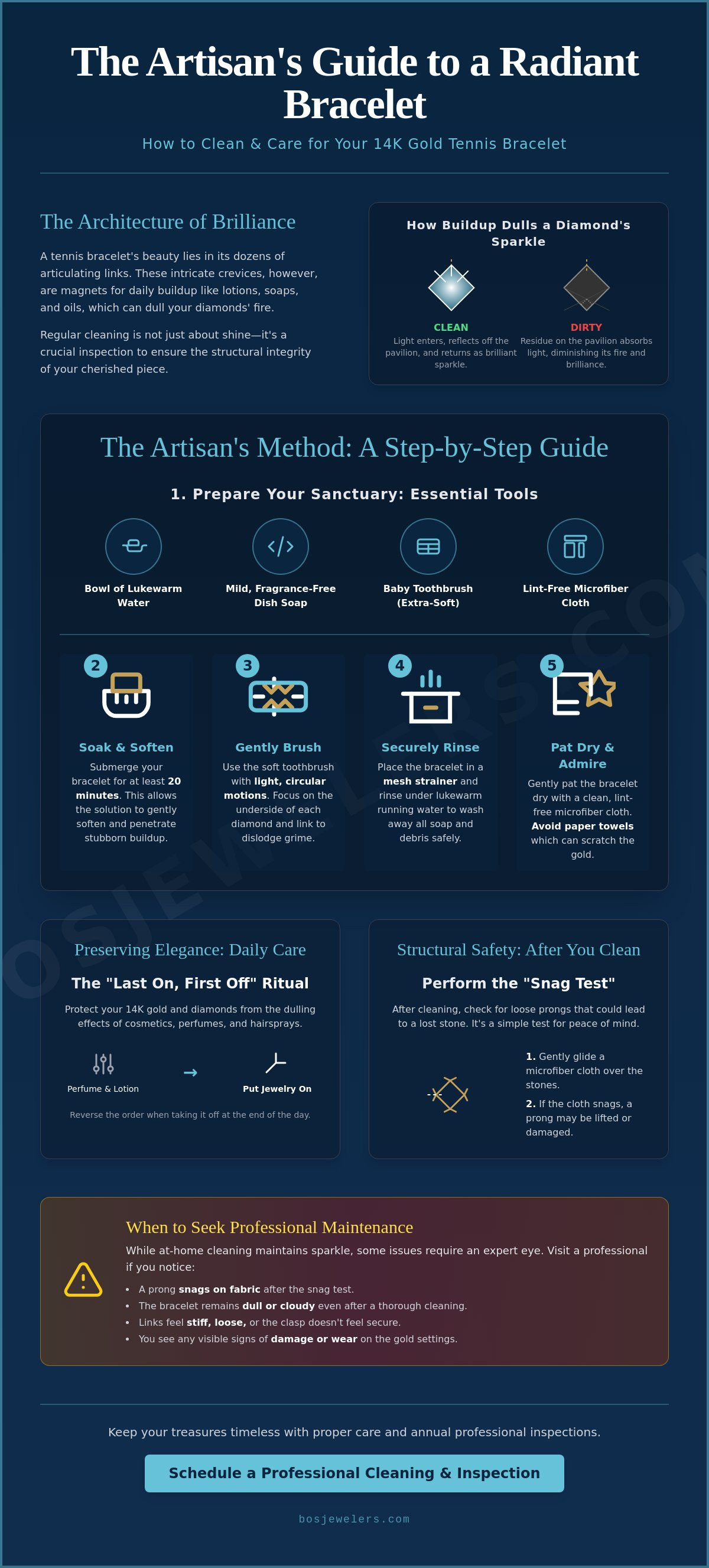
A diamond tennis bracelet is a masterpiece of fluid engineering. Unlike a solid bangle, it consists of dozens of individual 14K gold settings, each meticulously joined by articulating links to drape elegantly across your wrist. This intricate construction is exactly why learning how to clean a gold tennis bracelet is essential for any collector. While the eternity design offers a seamless circle of light, those same tiny crevices act as a magnet for daily life. Hand lotions, artisan soaps, and natural skin oils find their way behind each stone, creating a stubborn film that obscures the diamond's natural fire.
The secret to a diamond’s sparkle lies in light refraction. When light enters the stone, it should bounce off the pavilion, which is the pointed bottom of the diamond, and return to your eye. If the pavilion is coated in residue, the light is absorbed rather than reflected. This is why a simple surface wipe is never enough. To truly restore brilliance, you must address the buildup hidden within the complex gold architecture. High-quality 14K gold provides the perfect foundation for this brilliance, offering a durable setting that stands up to the rigors of both daily wear and regular maintenance.
Why Tennis Bracelets Require Frequent Care
Your bracelet lives in constant contact with your skin. This leads to a steady accumulation of sebum and sweat. Beyond biology, the tiny prongs holding your diamonds can act like a sieve, catching microscopic fibers from your favorite sweaters or stray dust particles. This debris doesn't just dull the shine. If left unaddressed, it can actually hide damage or put microscopic pressure on the settings. Regular maintenance ensures that these small particles don't compromise the security of your diamonds or the movement of the links.
The 14K Gold Advantage
We believe 14K gold is the professional standard for a piece intended to last a lifetime. It offers an ideal balance of rich color and enduring strength. Unlike plated alternatives that can flake or wear away, 14K gold maintains its structural integrity through years of wear. It doesn’t react harshly to most gentle cleaning agents, though it can develop a surface film that masks its golden glow. While we often recommend professional ultrasonic jewellery cleaning for a deep restoration, understanding how to clean a gold tennis bracelet at home allows you to maintain that radiant luster between your annual boutique inspections.
The Artisan’s Method for At-Home Cleaning
The delicate dance of light across your wrist depends entirely on the clarity of each stone. While the architecture of these pieces is complex, the process for restoring their luster is remarkably simple when approached with patience. To begin, prepare a sanctuary for your jewelry by mixing a few drops of mild, fragrance-free dish soap into a bowl of lukewarm water. Avoid hot water, as extreme temperature shifts can potentially stress certain gemstones. Submerge your piece entirely, allowing it to rest for at least 20 minutes. This quiet time is essential; it allows the solution to penetrate the tight spaces between links and soften the stubborn oils that have settled behind the gold settings.
Learning how to clean a gold tennis bracelet effectively requires a gentle touch rather than force. Once the soak is complete, you will notice the residue beginning to lift. This is the moment to transition from soaking to active care, ensuring every facet of your 14K gold setting is treated with the respect it deserves. Your goal is a thorough restoration that honors the artisan's original work without causing unnecessary wear to the precious metal.
Essential Tools for a Safe Clean
The tools you choose are just as important as the technique itself. We always recommend using a baby toothbrush with "extra-soft" bristles. Standard toothbrushes are often too abrasive and can create micro-scratches on the surface of the gold over time. A mesh strainer is another indispensable ally. By placing your bracelet inside the strainer during the rinsing phase, you eliminate the risk of the piece slipping into the plumbing. Finally, set aside a clean, lint-free microfiber cloth. Unlike paper towels, which can leave behind tiny fibers or even scratch the metal, microfiber provides a smooth finish that won't snag on delicate prongs. For more comprehensive guidance on maintaining various types of fine pieces, the American Gem Society provides excellent professional cleaning and inspections resources that align with our heritage standards.
Step-by-Step Execution
Hold the bracelet gently by the edges and use the soft toothbrush to agitate the underside of each diamond. Focus on the pavilion of the stones using light, circular motions. This specific "circular brush" technique is the most effective way to dislodge debris from the hollows of the gold settings. Be particularly mindful around the clasp. While you want to remove any buildup, avoid scrubing the internal spring mechanism too vigorously to ensure the lock remains secure.
Rinse the bracelet under a steady stream of warm water while it sits safely in your strainer. Once the soap is gone, perform a final inspection under a bright light to check for any remaining film. Pat the piece dry with your microfiber cloth rather than rubbing it. While home care is vital for daily radiance, our master jewelers provide exhaustive Jewelry Cleaning and Polishing services for those moments when your heirloom requires a deeper, professional touch to truly shine like new. Knowing how to clean a gold tennis bracelet at home is your first line of defense in preserving its timeless elegance.
Structural Safety: Inspecting Prongs and Links
The moment your jewelry is freshly scrubbed and free of debris is the most opportune time for a thorough structural audit. While you've mastered how to clean a gold tennis bracelet, the true value of this process lies in the clarity it brings to your structural inspection. Without the camouflage of lotion or dust, every prong and link is visible to the naked eye. We recommend performing a "snag test" using a piece of fine silk or a delicate scarf. Gently run the fabric over the length of the bracelet. If the silk catches on a specific point, it's a clear signal that a prong has lifted or become sharp, requiring immediate attention before a diamond is lost.
Beyond the stones, the metal itself tells a story of wear and longevity. Hold your bracelet by one end and observe how it drapes. A well-maintained piece should flow like water, with each articulating link moving fluidly against its neighbor. If you notice "kinks" or sections that remain stiff, there may be hidden debris still trapped within the joint or a pin that has slightly bent. This is also the time to look for thinning gold. Over decades of celebratory wear, the points where links connect can experience friction, leading to a subtle loss of metal that may eventually compromise the entire strand.
The Prong Health Check
Using a simple magnifying glass or a jeweler's loupe, examine the "shoulders" of each diamond. You're looking for any "room to wiggle" between the stone and its gold housing. If a diamond rotates or moves when touched lightly with a toothpick, the setting has been compromised. Cleaning is often the only time you'll spot a bent prong that was previously anchored by hardened residue. If you discover a loose stone, our experts specialize in prong repair and maintenance to ensure your heirloom remains secure for another generation.
Clasp and Connection Integrity
Your bracelet's safety depends entirely on the integrity of its closure. Test the box lock by listening for a crisp, audible "click" when it's engaged. A silent entry often means the internal tension has faded, which can lead to an accidental opening. Don't overlook the figure-eight safety latches on the side; these should snap firmly into place without feeling loose. While gold is remarkably durable, multi-link bracelets are susceptible to stretching over many years of active use. Regular inspections during your routine for how to clean a gold tennis bracelet will help you identify these subtle changes in length or tension before they become a risk.
Preserving Elegance: Daily Care and Protection
Preserving the luster of your jewelry is as much about what you don't do as what you do. We always advise our clients to follow the "Last On, First Off" rule. This simple ritual ensures that your 14K gold and diamonds aren't exposed to the fine mists of hairsprays, the oils of heavy perfumes, or the chemical residues in cosmetics. These substances create a film that mimics the very dullness you sought to remove when learning how to clean a gold tennis bracelet. By making your jewelry the final touch to your ensemble, you protect its radiance from the start of the day and prevent the need for more frequent deep cleanings.
For light maintenance between deeper soaks, adopt a weekly "dry wipe" technique. Use a clean, dry microfiber cloth to gently buff the surface of the gold and the tops of the stones. This removes the light accumulation of daily skin oils before they have a chance to harden into the stubborn buildup that requires a deep soak. It's a quiet, meditative moment that keeps you connected to the beauty and condition of your piece.
Chemical Avoidance List
Certain environments are inherently hostile to fine jewelry. You should never wear your gold tennis bracelet in a chlorinated pool or a hot tub. Chlorine is a silent aggressor that can actually leach the alloys out of your gold, leading to stress corrosion and eventual breakage over time. We also recommend avoiding several common household items:
- Chlorine and Bleach: These chemicals can weaken the structural integrity of gold alloys, making prongs brittle.
- Abrasive Cleaners: Never use baking soda or toothpaste. These are far too harsh for fine gold and can leave permanent micro-scratches.
- Hand Sanitizers: Frequent use of alcohol-based sanitizers can dull the brilliance of your diamonds and leave a cloudy residue on the gold.
Smart Storage Solutions
Storage is often an afterthought, yet it's vital for preventing "link-lock" and surface abrasions. When you aren't wearing your piece, lay it flat in a soft-lined box. This prevents the articulating links from jumbling or kinking, which can happen if a bracelet is simply tossed into a tray. If you store your bracelet alongside other 14K gold bangles, use individual velvet pouches to keep them separate. Diamonds are exceptionally hard and can easily scratch the polished gold surfaces of adjacent jewelry. A dedicated armoire is a wonderful investment for organizing high-value diamond engagement rings and bracelets, ensuring each treasure has its own protected sanctuary.
If you've noticed your piece has lost its signature glow despite your best efforts at home, it may be time for a professional touch. We invite you to explore our Jewelry Cleaning and Polishing services to restore your bracelet to its original boutique brilliance.
When to Seek Professional Jewelry Maintenance
While mastering how to clean a gold tennis bracelet at home is a vital skill for any enthusiast, it's merely one part of a larger stewardship. There are depths of grime and microscopic structural shifts that a soft toothbrush simply cannot reach. Professional maintenance acts as the "preventative medicine" of the fine jewelry world. We recommend an annual visit to a master jeweler to ensure your piece remains as secure as it is beautiful. This is especially important for 14K gold items that have been passed down through generations, where the metal may show the soft patina of time alongside deeper surface scratches that only professional polishing can safely erase.
A professional restoration doesn't just clean; it rejuvenates the metal's surface. Over years of celebratory wear, even the finest gold can develop tiny nicks from contact with other hard surfaces. Our artisans use specialized polishing wheels and compounds to gently lift these marks, returning the gold to its original mirror-like finish. This level of care ensures that your jewelry doesn't just look clean, but looks truly new. Understanding how to clean a gold tennis bracelet is your daily defense, but the jeweler’s bench is where its longevity is guaranteed.
The Professional Cleaning Process
Our in-house artisans utilize specialized equipment that goes far beyond the capabilities of a kitchen soak. Ultrasonic cleaners use high-frequency sound waves to create millions of microscopic bubbles in a specialized solution. These bubbles reach into the "impossible" areas behind the diamond pavilions and between articulating links, dislodging debris that has been compacted over months of wear. Following this, high-pressure steam is used to blast away any remaining film or oils. This meticulous process concludes with professional drying techniques that prevent the unsightly water spots often left behind by DIY methods.
Master Repairs and Restoration
A thorough professional cleaning often serves as a diagnostic tool. Once the residue is cleared, we might identify a need for expert ring resizing or the careful shortening of a bracelet that has stretched over the years. Our master jewelers are skilled in the delicate art of re-tipping prongs, adding fresh 14K gold to the tips of worn settings to keep your diamonds firmly anchored. With over 40 years of heritage in our local community, we treat every restoration with the same reverence we give our own family heirlooms. We don't just see a piece of jewelry; we see a legacy that deserves to shine with its original fire for another forty years and beyond.
Preserving Your Legacy of Light
Your diamond tennis bracelet is more than just an accessory; it's a wearable history of your most cherished milestones. By mastering the art of how to clean a gold tennis bracelet at home, you ensure that every link and setting continues to tell your story with unmistakable clarity. A gentle soak and a soft touch are your best defenses against the dulling effects of daily life, while regular structural inspections keep your diamonds secure for the years ahead. It's these small acts of care that preserve the brilliance of your jewelry for the next generation.
While home care is essential, the quiet confidence that comes from a professional inspection is irreplaceable. For over 40 years, our on-site master jewelers have dedicated themselves to the artistry of 14K gold and diamonds, ensuring that every heirloom receives the specialized attention it deserves. Whether you're seeking a meticulous restoration of a family treasure or looking to begin a new tradition, we invite you to discover our collection of heirloom-quality Diamond Tennis Bracelets. Let us help you maintain a radiance that transcends time and celebrates the beauty of your unique journey.
Frequently Asked Questions
Can I use an ultrasonic cleaner at home for my gold tennis bracelet?
We generally advise against using home ultrasonic machines for delicate multi-stone pieces. While the technology is effective, the high-frequency vibrations can actually shake diamonds loose if a prong is already slightly weakened. Our on-site master jewelers always perform a rigorous structural inspection before and after using professional-grade equipment to ensure every stone remains perfectly anchored in its setting.
Is it safe to clean my tennis bracelet with vinegar or lemon juice?
You should avoid using acidic substances like vinegar or lemon juice on your fine jewelry. These liquids are far too harsh for the alloys found in 14K gold and can lead to long-term surface damage or discoloration. When you're considering how to clean a gold tennis bracelet, the safest and most effective approach is always a pH-neutral, gentle solution that respects the integrity of the precious metal.
How often should I professionally clean my diamond tennis bracelet?
We recommend a professional cleaning and inspection at least once or twice a year. This annual ritual serves as "preventative medicine" for your jewelry, allowing an expert to remove deeply compacted debris that home methods can't reach. More importantly, it provides an opportunity for a master artisan to verify the tension of your clasp and the health of every individual prong under high magnification.
Will cleaning my bracelet at home make the diamonds fall out?
Gentle at-home cleaning will not cause diamonds to fall out of a healthy, well-maintained setting. In fact, removing buildup often reveals a stone that was already loose but held in place by hardened oils and dust. By following a careful routine, you're actually protecting your investment by identifying potential issues before a stone is lost during daily wear.
What is the best cloth to use for drying a gold bracelet?
A clean, lint-free microfiber cloth is the superior choice for drying your 14K gold pieces. Unlike paper towels or standard bath towels, microfiber won't leave behind tiny fibers or create microscopic scratches on the polished gold surface. Its smooth texture also prevents the heartbreak of snagging a delicate prong, which can happen with looped terry cloth fabrics.
Can I wear my tennis bracelet in the shower?
We suggest removing your bracelet before you step into the shower. Over time, the fats in body washes and the minerals in hard water create a stubborn film known as soap scum, which clings to the back of your diamonds. This buildup acts like a veil, blocking light from entering the stones and leaving your once-radiant bracelet looking cloudy and tired.
How do I remove heavy buildup from the back of the diamonds?
The most effective way to address stubborn residue is a prolonged soak in warm, soapy water followed by a gentle agitation. Use an extra-soft baby toothbrush to reach the pavilion, or the pointed underside, of each diamond. This specific area is where most light refraction occurs, so keeping the back of the stones clear is the secret to maintaining that signature "eternity" sparkle.
Is dish soap really safe for 14K gold and diamonds?
Mild, fragrance-free dish soap is the professional standard for at-home care. It is specifically formulated to break down the organic oils and grease that accumulate from skin contact without reacting poorly with 14K gold. When people ask us how to clean a gold tennis bracelet safely, we always point them toward this simple, trusted method as the foundation of a lasting maintenance routine.