

Choosing a Wedding Band to Match an Engagement Ring: A 2026 Guide
What if the band that looks like a perfect match doesn’t sit comfortably beside your engagement ring? Start with fit, not just matching metal or sparkle. When choosing a wedding band to match engagement ring details, the setting and profile can determine whether a straight band sits flush or leaves a gap.
It’s natural to want both rings to feel connected while still reflecting your personal style. They don’t have to share identical designs. A contrasting metal, a contoured shape, or colored gemstones can create a considered pairing, provided the rings feel comfortable together and suit your everyday routine.
This guide explains how setting, profile, metal, and gemstones affect a wedding band’s fit and appearance. It also covers coordinated and contrasting combinations, including birthstone ideas such as sapphire, ruby, and emerald. Start by checking how the rings sit together, then compare the details that make the pairing feel like yours.
Key Takeaways
- When choosing a wedding band to match engagement ring details, assess the setting and profile first to see whether a straight band can sit comfortably beside it.
- Compare coordinated and contrasting metals, band profiles, and gemstones to find a pairing that complements your engagement ring without copying it.
- Consider your daily routines when weighing a slim or wider band, and a plain or stone-set design.
- Use a practical fit check to review clearance, comfort, metal, style, and care before making your choice.
- If the rings feel crowded or their fit is uncertain, bring both to a qualified jeweler for an expert assessment.
Choosing a Wedding Band to Match Your Engagement Ring Starts with Fit
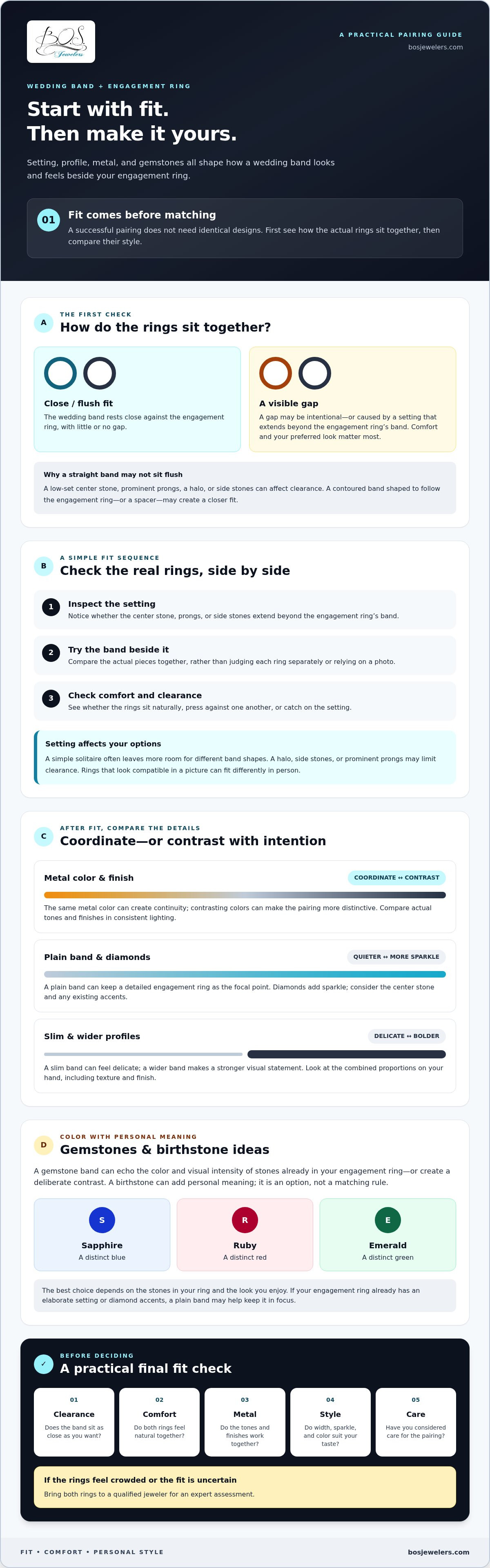
A successful pairing doesn’t require identical designs. First, check how the two rings sit together. The engagement ring’s setting, profile, and dimensions can determine whether a straight band rests beside it or leaves a visible space.
A flush fit means the wedding band sits close against the engagement ring, with little or no gap. A small gap isn’t necessarily a flaw. It may be intentional, or it may result from a setting that extends beyond the band. What matters is that the rings feel comfortable and look the way you want when worn together.
Start with three practical checks:
- Inspect the setting: Look for a center stone, prongs, or side stones that extend beyond the engagement ring’s band.
- Try the wedding band beside it: Compare the actual rings together rather than judging each one separately or relying on a photo.
- Assess comfort: Check that both rings sit naturally and don’t press against or catch on each other.
Will a straight wedding band sit flush against the engagement ring?
That depends on the ring’s shape and setting. A low-set center stone or a setting that projects past the band can keep a straight wedding band from sitting close, leaving a gap. A contoured band, shaped to follow the engagement ring, or a spacer between the rings may create a closer fit. Try the pieces together before deciding. A small gap may suit your preferred look, while a closer fit may be what you want.
How the engagement-ring setting changes your options
A simple solitaire often leaves more room for different band shapes. A halo, side stones, or prominent prongs may limit clearance. These details affect how close a band can sit and whether its edge touches the setting. Two rings that look compatible in a picture may fit differently in person, so assess the actual pieces together before choosing a shape.
The choice is personal as well as practical, shaped by the history and tradition of wedding rings and by how you want your own rings to sit together. If you’re uncertain about clearance or sizing, a qualified jeweler can assess the rings side by side.
Compare Metal, Style, and Gemstones Without Losing the Ring’s Character
Once you’ve considered fit, compare the band’s metal, width, finish, and sparkle with your engagement ring. Matching metals can create a coordinated set, but a deliberate contrast can feel just as cohesive. Aim to complement the ring’s character rather than compete with it. As you compare options, view both rings together in consistent lighting, since color and finish can look different as the light changes.
| Choice | Effect beside the engagement ring | Consider |
|---|---|---|
| Same or mixed metals | The same metal color gives a coordinated look; contrasting colors make the pairing more distinctive. | Compare the actual tones and finishes side by side. Neither approach is universally right. |
| Diamond or plain band | Diamonds add sparkle, while a plain band can leave a detailed engagement ring as the focal point. | Consider the visual presence of the center stone and any existing accents. |
| Slim or wider profile | A slim band can feel delicate beside the ring; a wider one makes a stronger visual statement. | Look at the combined proportions on your hand, along with the texture and finish. |
Should your wedding band match your engagement ring’s metal?
Choosing the same metal is a classic way to create continuity. A different color or finish can make the contrast feel intentional. For example, a warm-toned band beside a cooler-toned engagement ring creates a clear distinction without requiring the designs to match. Compare the rings in consistent lighting, and consider how the band’s width and texture affect the overall look. The GIA guide to ring styles and metals offers additional background as you compare options.
When diamonds, colored gemstones, or birthstones belong in the pairing
If your engagement ring has an elaborate setting or plenty of diamond accents, a plain band may help keep it in focus. If it already features colored stones, consider whether a gemstone band echoes their color and visual intensity or creates a deliberate contrast. Sapphires, rubies, and emeralds each add a distinct color, but the best choice depends on the stones in your ring and the look you enjoy. A birthstone can add personal meaning, too. It’s an option, not a matching rule.
For a considered perspective on the engagement ring itself, explore BOS Jewelers’ diamond engagement-ring expertise.
Choose a Wedding Band Style for Comfort, Daily Wear, and Future Flexibility
A band should feel as natural as it looks. During a try-on, wear it beside your engagement ring and notice how the pair feels as you bend your fingers, make a fist, or rest your hand on a surface. Choosing a wedding band to match engagement ring style means considering how the rings feel during your everyday routines, not just how they look in a still moment.
Which wedding-band profile feels comfortable beside your engagement ring?
A rounded interior curves gently against your finger, while a flatter interior feels more level across the surface. Neither is automatically more comfortable. Your preference depends on how the ring sits on your hand. A narrower band may have a lighter visual presence beside a delicate engagement ring, while a wider band can create stronger balance or feel more substantial. Try more than one width and notice any rubbing, pressure, or restricted movement. The right profile is the one that feels easy to wear alongside your existing ring.
Do diamonds or a plain band suit your everyday routine?
A plain band offers a quieter look and a smooth visual counterpoint to an engagement ring with intricate details. A stone-set band adds brilliance, but its settings may need more attention during cleaning, and raised details can catch on fabric depending on the design. Think about the tasks you do often, whether you wear gloves, work with your hands, or prefer to remove rings for certain activities. Those habits can help guide your choice without ruling out sparkle.
When possible, wear both rings together for a while instead of judging them only at the counter or in a photograph. Check whether the band stays in a comfortable position, whether the rings rub in a distracting way, and whether the combination still lets your engagement ring stand out. Considering daily wear can also help you choose a style you’ll enjoy if your preferences change.
If you’re still considering the engagement ring’s design, explore BOS Jewelers’ guide to diamond engagement rings for more context. You can also learn about BOS Jewelers’ diamond engagement rings as you refine the look and feel you want.
Make Your Final Wedding-Band Choice with a Practical Fit Check
Before settling on a pairing, try both rings on together and review the details in person. This check can reveal issues that photos or separate try-ons may not show. Use the list below to make choosing a wedding band to match engagement ring details more considered and confident.
A five-point try-on checklist before you decide
- Setting clearance: Check that the band sits beside the engagement ring as you intend, without pressing against the center stone, prongs, or side stones.
- Comfort: Move your hand naturally. Notice pressure, rubbing, snagging, or any feeling that your fingers can’t move freely.
- Metal: Look at both rings together in consistent lighting and decide whether their colors and finishes feel coordinated or deliberately contrasting.
- Style: Consider the combined proportions and sparkle. Make sure the band complements the engagement ring without overwhelming the details you love.
- Care: Think about the attention each design may need. A stone-set band may require more care around its settings than a plain band.
When to ask a jeweler about resizing or prong security
If either ring feels loose, tight, or unstable, or you’re unsure about stone clearance, bring both pieces to a qualified jeweler for assessment. Whether a ring can be resized depends on its construction, so an in-person evaluation is preferable to assuming an adjustment is possible. If a stone seems loose or a prong looks damaged, ask a professional to check it before wearing the ring further.
For questions about sizing, see BOS Jewelers’ ring-resizing guide. BOS Jewelers is a family-owned business with over 40 years of jewelry experience, offering professional ring resizing and prong repair. Explore our diamond engagement rings and ring repair expertise as you consider a choice that feels comfortable and true to you.
Choose a Pairing That Feels Like Yours
A successful pairing brings together fit, comfort, and personal style. First check how the band sits beside the engagement ring’s setting, then consider whether the metals, proportions, and sparkle feel balanced. The rings don’t have to match. Choose a combination that feels comfortable and true to you.
As you’re choosing a wedding band to match engagement ring details, try the rings on together and move your hand naturally. If either ring feels loose or tight, or you have concerns about stone clearance or prongs, seek a jeweler’s assessment before deciding. Ring construction affects whether resizing is suitable.
BOS Jewelers is a family-owned business with over 40 years of jewelry experience. We offer diamond engagement rings, professional ring resizing, and prong repair. Explore BOS Jewelers’ diamond engagement rings and jewelry services as you consider your next step. Take your time and choose a pairing that feels right to you.
Frequently Asked Questions
Can any wedding band match an engagement ring?
A wedding band can complement many engagement-ring styles, but the setting affects how the two rings sit together. A simple solitaire may leave room for different band shapes, while a low or elaborate setting may call for a contoured band or spacer. Try the pieces together to check clearance and comfort. Matching metals is optional. Aim for a combination that looks intentional and feels like your style.
Should a wedding band sit flush against an engagement ring?
No, a flush fit is a preference, not a requirement. Some people like a seamless look, while others prefer a small gap that keeps the engagement ring’s outline distinct. A projecting center stone or low setting can prevent a straight band from sitting close. Try both rings on together, and ask a jeweler about a contoured band or spacer if you’d like them to sit nearer one another.
Does my wedding band have to be the same metal as my engagement ring?
No. Choosing the same metal can create a coordinated appearance, while different metal colors or finishes can make a deliberate contrast. Compare the rings side by side in consistent lighting, since color names alone may not show how the actual tones look together. Consider the bands’ proportions and finishes, too. There’s no universal rule. Choose the pairing that feels cohesive to you.
Is a contoured wedding band better for a halo engagement ring?
A contoured band can help if a halo or another raised detail keeps a straight band from sitting close, but it isn’t automatically the better option. The ring’s specific shape and setting determine the available clearance. Try a contoured and a straight band beside the engagement ring, then compare comfort and appearance. Not every halo requires a curved band, so assess the actual rings together before deciding.
Can I pair a birthstone wedding band with a diamond engagement ring?
Yes. A birthstone can add personal meaning, but it doesn’t need to match the engagement-ring stones. Consider how the colors, visual intensity, and placement work together when both rings are worn. For example, if your engagement ring already features colored gemstones, compare the hues in person before adding another colored accent. The aim is a balanced pairing that reflects your taste, not a strict gemstone-matching rule.
What should I check when trying on a wedding band with my engagement ring?
Wear both rings together and check setting clearance, comfort, movement, and overall proportions. Move your hand naturally and notice any rubbing, pressure, or snagging. View the rings in consistent lighting to compare their metal colors and sparkle. If either ring feels loose or unstable, or the band doesn’t sit as you intended, ask a qualified jeweler to assess the fit and stone clearance before making your decision.