

14K vs. 18K Gold for Your Engagement Ring: The Master Guide to Purity and Performance
Last Tuesday, a client visited our Miami workshop with a 25 year old heirloom, worried that the delicate prongs were finally too soft to hold her center diamond. It's a common fear for anyone weighing the merits of 14k vs 18k gold for engagement ring settings, especially when you're investing in a piece meant to last a lifetime. You want a ring that radiates a rich, buttery glow, yet you also need the peace of mind that your stone remains secure through every workout, commute, and celebration. It's natural to feel torn between the prestige of a higher karat and the practical strength of a lower one.
At BOS Jewelers, we believe your legacy deserves both exquisite beauty and masterfully crafted resilience. We'll show you exactly how these two alloys perform over decades of wear, helping you find the perfect balance of luster and longevity for your specific lifestyle. This guide breaks down the technical science of metal hardness and the visual nuances of color so you can choose your forever ring with the quiet confidence of a seasoned expert. From the security of your setting to the vibrancy of the gold, we'll ensure your choice is as timeless as the love it represents.
Key Takeaways
- Understand the delicate balance of gold alloys and how specific purity ratios define the structural integrity and timeless beauty of your forever piece.
- Learn how varying gold concentrations influence color saturation and brilliance to help you select a tone that perfectly complements your skin’s natural radiance.
- Navigate the essential trade-offs between daily durability and refined luster when choosing 14k vs 18k gold for engagement ring settings that suit your unique lifestyle.
- Evaluate the long-term value and heirloom potential of higher karat weights to ensure your investment remains a masterfully crafted legacy for generations.
- Discover a professional framework for selecting a metal purity that harmonizes your personal aesthetic with the practical demands of your daily routine.
The Karat System Decoded: Purity and the Science of Gold Alloys
Choosing the perfect foundation for your forever piece requires a balance of aesthetic beauty and technical performance. When you begin your search, the choice between 14k vs 18k gold for engagement ring settings often feels like the most significant technical decision you'll make. At BOS Jewelers, we believe that understanding the "why" behind the metal is just as important as the design itself. The karat system is a 24-part scale used to measure the ratio of pure gold to other metals. While 24K gold is 99.9% pure, its natural state is surprisingly soft and malleable. It's easily scratched and can lose its shape under the pressure of daily wear, which is why 24K is never recommended for a piece intended to hold a precious diamond securely for a lifetime.
To transform gold into a material capable of becoming a family heirloom, we look to the science of gold alloys. By blending pure gold with stronger metals like copper, silver, and zinc, we achieve the structural integrity required for intricate prongs and delicate bands. This metallurgical process doesn't just add strength; it also allows us to create the distinct hues of yellow, white, and rose gold that define our custom creations. Whether you're visiting our Miami showroom or designing a bespoke piece from afar, these ratios determine how your ring will feel on your hand and how it will age over the decades.
The Anatomy of 14K Gold
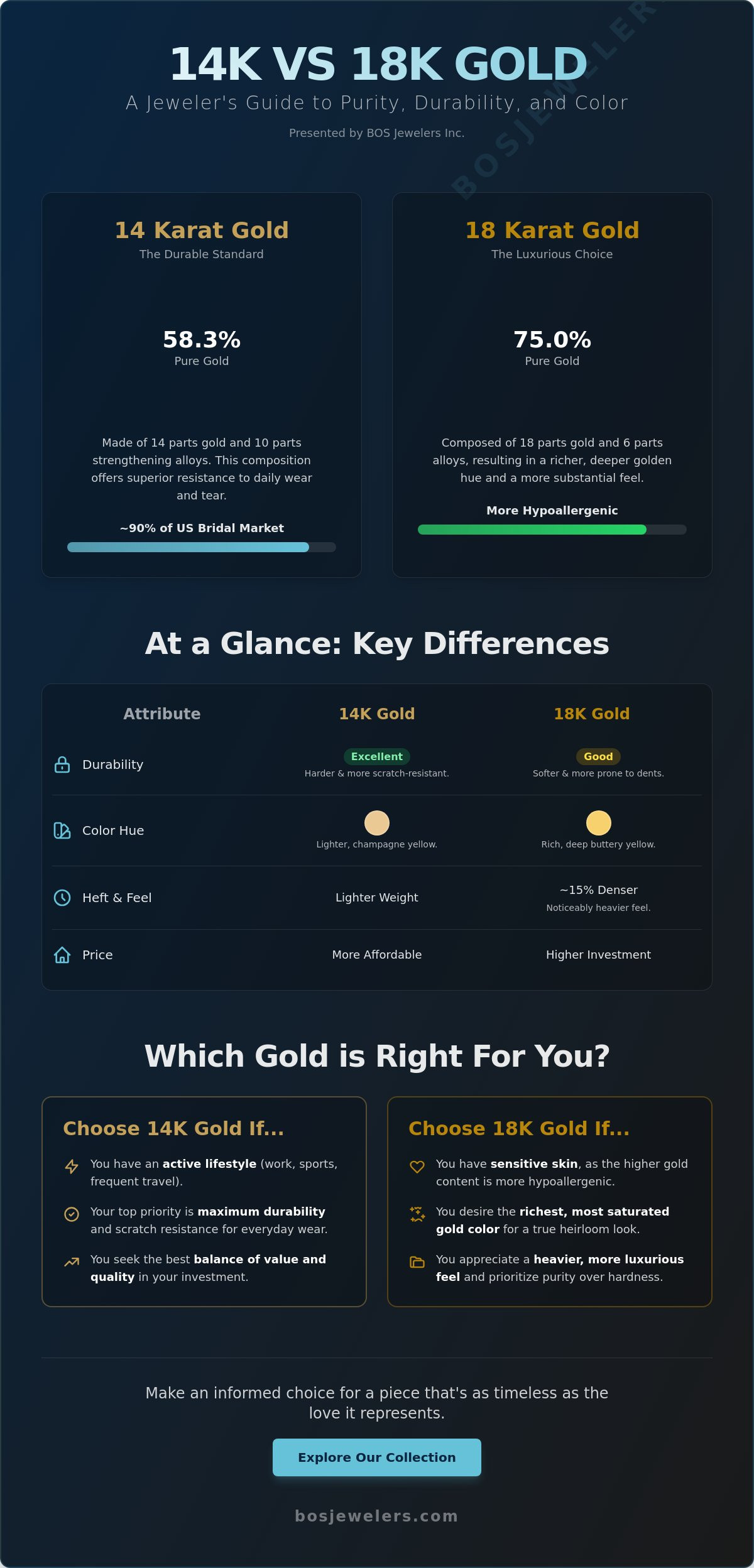
In North America, 14K gold is the most popular choice for engagement rings, accounting for approximately 90% of the bridal market. This alloy consists of 14 parts gold and 10 parts additional metals, resulting in a composition that is 58.3% pure gold. The higher percentage of alloy metals makes 14K significantly harder than its 18K counterpart, offering superior resistance to the bumps and scrapes of an active lifestyle. 14K gold represents the optimal intersection of gold luster and industrial-grade durability. For those who prioritize a secure setting and a metal that maintains its polished finish with minimal maintenance, 14K is a reliable and beautiful standard.
The Prestige of 18K Gold
If you're seeking a deeper, more traditional golden glow, 18K gold offers a sense of luxury that's favored by high-end European houses and discerning collectors. Consisting of 18 parts gold and 6 parts alloy, this 75% pure composition provides a rich saturation of color that's unmistakable. Beyond the visual appeal, 18K gold is approximately 15% denser than 14K, giving the ring a substantial "heft" that feels prestigious on the finger. When deciding on 14k vs 18k gold for engagement ring designs, consider skin sensitivity as well. Because 18K has a higher gold content and fewer base metal alloys, it's naturally more hypoallergenic and kinder to sensitive skin. It's a choice that honors the heritage of fine jewelry while providing a soft, buttery luster that only high-purity gold can offer.
Aesthetic Differences: Comparing Color, Tone, and Brilliance
Selecting the right metal is about more than just a hallmark; it's about how the light dances off your finger every day. The purity of the metal dictates the intensity of its hue. When deciding between 14k vs 18k gold for engagement ring settings, you're choosing between a subtle, modern glow and a deep, historical radiance. This visual impact stems directly from the alloy composition. 18K gold consists of 75% pure gold, while 14K contains 58.3% gold mixed with metals like silver and copper.
Yellow Gold: Subtle Glow vs. Deep Richness
18K yellow gold is the gold of royalty. It possesses a heavy, buttery richness that feels timeless and substantial. This high gold content provides a saturated warmth that beautifully complements olive or darker skin tones. In contrast, 14K yellow gold offers a lighter, champagne-like tone. It's often the preferred choice for those with cooler skin undertones who still desire the tradition of yellow gold without the intensity of a deep yellow finish.
The metal's color also plays a silent role in your diamond's appearance. A very white diamond may pick up yellow reflections from an 18K setting. Many of our clients choose a 14K setting to better complement a round brilliant diamond ring, ensuring the stone's fire remains crisp and icy. If you prefer a vintage aesthetic, the 18K glow provides a romantic, sun-drenched backdrop that makes any center stone feel like a family heirloom.
White and Rose Gold Nuances
The 14k vs 18k gold for engagement ring debate shifts when we look at white and rose alloys. For white gold, the visual difference is almost non-existent because both are typically finished with rhodium plating. This platinum-family metal provides that signature mirror-like shine. Whether the underlying gold is 14K or 18K, the exterior remains brilliantly white. However, 18K white gold is naturally slightly "greyer" before plating, while 14K is whiter due to its higher silver and nickel content.
- Rose Gold: 14K rose gold has a higher copper content, resulting in a bold, pinkish-red contrast that looks striking on all skin types.
- Soft Pink: 18K rose gold is softer and more peach-toned. It offers a sophisticated blush that feels delicate and feminine.
Regardless of your choice, maintaining that original luster requires care. We recommend regular jewelry cleaning to ensure your chosen alloy continues to shine as it did the day you left our Miami showroom. If you're unsure which tone suits your hand best, visit us at BOS Jewelers to see these metals side-by-side under our professional lighting.
Durability and Security: The Master Jeweler’s Perspective
Choosing 14k vs 18k gold for engagement ring longevity involves more than just selecting a color. It requires an understanding of how your ring will age over decades of daily wear. At BOS Jewelers, our on-site master jewelers analyze the technical performance of these metals every day. The primary difference lies in the alloy composition. Since 24K gold is too soft for fine jewelry, we mix it with metals like copper, silver, and zinc. 14K gold contains 58.3% pure gold, while 18K gold contains 75%. This higher gold content makes 18K more susceptible to surface scratches and scuffs from contact with hard surfaces like granite countertops or car doors.
A harder metal isn't always the superior choice for every design. While 14K is technically harder, 18K gold offers a specific malleability that makes it less brittle. In the 75 years our family has served the Miami community, we've found that the right choice for a 14k vs 18k gold for engagement ring depends heavily on your lifestyle. A nurse or an athlete might benefit from the rigidity of 14K, while someone in a corporate environment can safely enjoy the rich luster of 18K without excessive wear. It's about finding the equilibrium between the metal's strength and its ability to hold a polish.
Prong Security and Stone Safety
The tiny prongs holding your diamond are the most vulnerable part of any setting. Because 14K gold is stiffer, these prongs are less likely to bend if they catch on a sweater or a gym bag. Over a 20-year period, 18K prongs tend to wear down faster due to friction, eventually requiring "re-tipping" to keep the stone secure. We recommend a professional inspection every 6 months to catch these thin spots early. If your lifestyle changes or your finger size fluctuates, professional ring resizing and prong tightening are essential steps to preserve your legacy and prevent the loss of a center stone.
Hardness vs. Workability in Custom Design
Our master jewelers often prefer 18K gold when creating intricate, hand-carved details. Its softer nature allows for a level of artistic precision that 14K can't always match; it flows beautifully under the engraver's tool. Conversely, we utilize 14K for high-pressure settings or tension designs where the metal's grip is the only thing holding the diamond in place. By performing all technical repairs on-site, we ensure that whether you choose 14K or 18K, your custom creation is built to survive the rigors of your unique life. Quality isn't just about the karat weight. It's about the expert craftsmanship that balances beauty with structural integrity.
The Value Equation: Price, Purity, and Heirloom Potential
Choosing between 14k vs 18k gold for engagement ring settings often comes down to a balance of immediate cost and future worth. While both alloys offer beauty, the value equation changes when you look at the raw materials. 18K gold contains 75% pure gold, while 14K contains 58.3%. This 16.7% difference in purity creates a price gap that reflects the global market value of the precious metal. When you invest in 18K, you're securing a higher percentage of a finite resource that has historically maintained its purchasing power through generations.
The resale and melt value of your ring also scales with its purity. Should you ever decide to upgrade or refine your piece, the higher gold content in an 18K band ensures a more significant return on the metal itself. Most couples find that the price premium for 18K is an investment in the "feel" of the ring. It's noticeably heavier on the finger, providing a sense of substance and prestige that lighter alloys lack. It's about more than just a label; it's about the tangible weight of your commitment.
Cost Comparison in 2026
Market projections for 2026 suggest that 18K settings will continue to command a 20% to 35% premium over 14K counterparts. While the master jeweler's labor remains constant regardless of the alloy, the fluctuating cost of gold bullion drives the final price. To maintain a balanced wedding budget, we recommend allocating approximately 15% of your total engagement ring spend to the metal. This ensures the setting is high enough in quality to support and protect your center diamond without overshadowing the stone's brilliance. Luxury doesn't have to be impractical if you plan your proportions correctly.
Crafting a Legacy of Love
At BOS Jewelers, we've spent decades helping Miami families select pieces that transcend temporary trends. We focus exclusively on high-purity gold and natural diamonds because these materials possess a lasting emotional and financial value that lesser alloys cannot match. Historically, 18K gold is viewed as the global gold standard for heritage jewelry because of its rich, buttery color and prestigious composition. It's a metal that tells your children and grandchildren that you chose the very best for your partner, ensuring the piece remains a cherished family heirloom for decades to come.
Ready to see the difference in person? Schedule a private consultation with our master jewelers to find the perfect gold purity for your legacy.
The Decision Framework: Which Gold Purity Is Right for You?
Selecting the foundation for your forever piece is a deeply personal step in your journey. It bridges the gap between your aesthetic dreams and the reality of your daily routine. When you evaluate 14k vs 18k gold for engagement ring longevity, you're deciding how your jewelry will age alongside you. Our master jewelers often suggest starting with an honest look at your hands. If you're a fitness enthusiast, a gardener, or a healthcare professional, your ring will face daily physical demands. The 58.3 percent gold content in 14k gold makes it remarkably resilient against scratches and dents.
Skin chemistry is another vital factor that many couples overlook until they feel an itch. Dermatological studies indicate that nickel allergies affect roughly 10 percent of people in the United States. Because 14k gold contains 41.7 percent alloy metals, it's more likely to include traces of nickel or copper that can irritate sensitive skin. Choosing 18k gold, which is 75 percent pure gold, significantly reduces the presence of these base metals. It offers a hypoallergenic sanctuary for your finger while providing that buttery, rich yellow hue that only high-purity gold can achieve.
We always invite you to our Miami showroom to experience the tactile differences firsthand. There is a specific weight to 18k gold that feels substantial and prestigious. It carries a certain "heft" that many clients associate with a true luxury heirloom. Conversely, 14k gold feels lighter and more nimble. Seeing the colors under different lighting is essential too. The subtle, pale glow of 14k yellow gold suits some skin tones better than the intense, sun-drenched vibrance of 18k.
Choose 14K Gold If...
- You lead a high-impact life: If you work with your hands or hit the gym daily, the added hardness of 14k gold provides peace of mind.
- You love subtle tones: This purity offers a softer yellow and a more pronounced, "pinker" rose gold due to the higher copper content.
- You're prioritizing the stone: Choosing 14k gold allows you to allocate more of your investment toward a larger or higher-grade center diamond.
Choose 18K Gold If...
- You crave classic brilliance: The 75 percent gold purity results in a deep, radiant yellow that looks exquisite against any skin tone.
- You have metal sensitivities: The higher gold-to-alloy ratio makes it the safer, more comfortable choice for those with known allergies.
- You're building a legacy: If you view this ring as a primary luxury investment to be passed down through generations, the prestige of 18k gold is unmatched.
At BOS Jewelers, we've spent decades helping families celebrate their most significant milestones. Whether you choose the rugged elegance of 14k or the opulent warmth of 18k, our on-site master jewelers ensure your custom creation is crafted to last a lifetime. We don't just sell jewelry; we help you create your legacy. We invite you to visit us and let our family guide yours in making this timeless choice. Welcome to the family.
Crafting a Legacy That Lasts a Lifetime
Selecting the ideal metal is about more than just aesthetics; it's about balancing your daily rhythm with your vision for the future. 14K gold provides 58.3% purity, which offers the structural resilience needed for an active lifestyle. Conversely, 18K gold features 75% pure gold, delivering a deeper, more luxurious warmth that captures the eye. The decision regarding 14k vs 18k gold for engagement ring designs rests on whether you prioritize maximum durability or the prestige of a higher gold content. At BOS Jewelers, we've spent over 40 years guiding families through these meaningful milestones. Our on site master jewelers work directly with these precious alloys to ensure every setting is secure and every detail is refined. We take pride in creating custom pieces designed to be passed down through generations. We invite you to explore our exquisite collection of custom diamond engagement rings and experience our heritage of quality firsthand. Your journey toward a perfect symbol of love starts with a single, thoughtful choice. Let's create something timeless together.
Frequently Asked Questions
Is 18K gold too soft for an engagement ring worn daily?
No, 18K gold isn't too soft for daily wear, though it requires more mindful care than 14K options. Since 18K consists of 75% pure gold, it's slightly more prone to surface scratches than its 58.3% gold counterpart. Our on-site master jewelers recommend 18K for those who value a rich, buttery glow and don't mind a professional polish every 2 or 3 years to maintain the finish.
Can people tell the difference between 14K and 18K gold just by looking?
You can often distinguish 18K from 14K gold by its deeper, more vibrant yellow hue. Because 18K gold contains 16.7% more pure gold than 14K, the color appears more saturated and luxurious. In a side-by-side comparison, 14K gold looks slightly paler because it contains a higher volume of silver and zinc alloys to increase its structural durability.
Does 14K gold tarnish or change color over time?
14K gold doesn't tarnish in the way sterling silver does, but its appearance can shift if the surface is neglected. For white gold specifically, the rhodium plating typically wears thin every 12 to 18 months, revealing the warmer yellowish undertones beneath. Regular cleaning at our Miami showroom ensures your piece retains the brilliance it had the day you joined our family.
Why is 18K gold better for people with sensitive skin or allergies?
18K gold is the superior choice for sensitive skin because it contains fewer base metal allergens. While 14K gold is composed of 41.7% alloy metals, 18K gold only uses 25% alloys, reducing the presence of nickel or copper. This higher purity level makes it a hypoallergenic option that 95% of our clients with metal sensitivities find comfortable for lifelong wear.
Is 14K gold considered "real" gold for a luxury engagement ring?
14K gold is absolutely real gold and remains the most popular choice for luxury engagement rings in the United States. According to Federal Trade Commission guidelines, jewelry must contain at least 10K gold to be sold as the real metal. Choosing 14k vs 18k gold for engagement ring designs allows you to balance 58.3% gold purity with the structural integrity needed for intricate, masterfully crafted settings.
How does the gold purity affect the price of the ring setting?
Gold purity directly impacts the price because 18K settings contain 28.5% more fine gold by weight than 14K settings. Since gold is traded as a global commodity, the cost of the raw material fluctuates daily based on market rates. You're investing in a higher concentration of precious metal when you select 18K, which reflects the legacy and intrinsic value of your bespoke creation.
Which gold purity is better for a rose gold engagement ring?
14K gold is often the preferred choice for rose gold because its higher copper content creates a more vivid, pinkish hue. In 18K rose gold, the 75% gold content can sometimes lean toward a softer, peachier tone. If you desire that classic, high-contrast vintage pink look, 14K provides the 41.7% alloy mix necessary to achieve that specific aesthetic brilliance.
Should I choose 14K or 18K gold for a white gold setting?
Choosing 14K gold is often the most practical decision for white gold settings because it's naturally whiter and more durable. When comparing 14k vs 18k gold for engagement ring longevity, 14K holds its shape better against the 2,500 daily impacts the average hand experiences. Both purities require rhodium plating to achieve a mirror-like silver finish, so the visual difference is virtually non-existent once the ring is finished.